
Please Choose Your Language
- All
- Product Name
- Product Keyword
- Product Model
- Product Summary
- Product Description
- Multi Field Search
TEL : +86-18920692288
Email : dwk0002025@163.com
Views: 0 Author: Site Editor Publish Time: 2026-05-27 Origin: Site


Upgrading to heavy-duty bending capabilities remains a major capital expenditure decision. Material constraints usually drive this upgrade rather than simple capacity expansion. Facilities facing changing fabrication demands quickly realize undersized equipment stifles operational growth. Standard press brakes struggle heavily when bending high-tensile materials, thick plates, or long spans. Pushing them too far leads directly to structural deflection, tooling wear, and inconsistent bend angles. Over time, these inefficiencies multiply scrap rates and degrade component quality.
Evaluating new heavy-duty equipment requires closely aligning your specific industrial applications. You must match correct tonnage, bending length, and hydraulic stability requirements to your daily production needs. This comprehensive guide maps core industry applications to precise technical requirements. You will learn how to align your shop floor demands to the right machinery. We aim to support a smarter, risk-free procurement shortlisting process.
Heavy-duty press brakes are non-negotiable for sectors like shipbuilding, heavy construction, and energy, where processing thick, high-yield steel is standard.
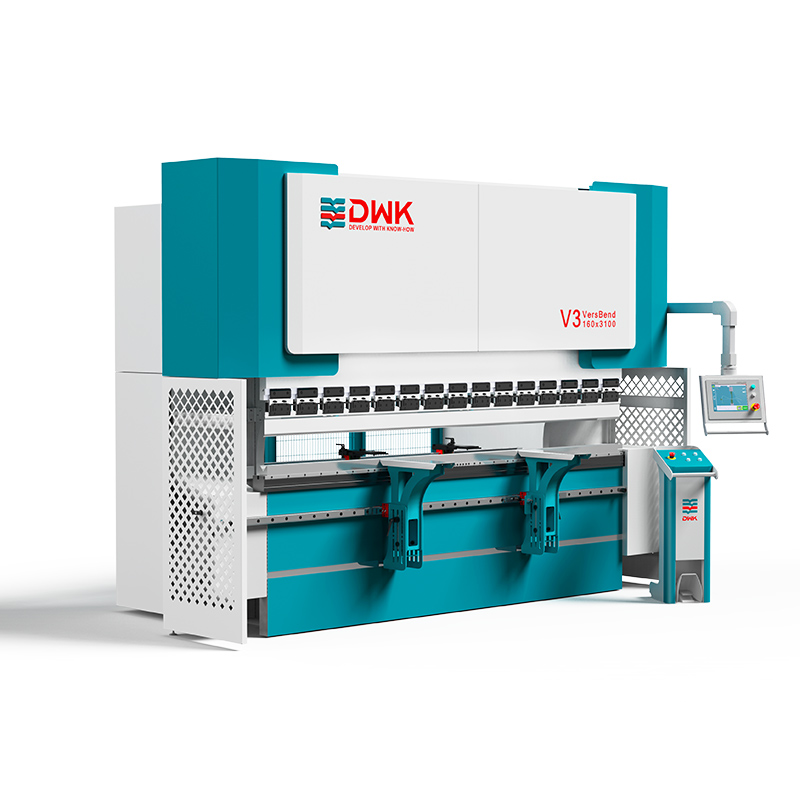
Selecting between models like the V3 160-3100 and the Heavy-Duty V4-225-4100 depends directly on your maximum material length and required bending force (tonnage).
Implementation requires factoring in hidden costs: reinforced foundation requirements, specialized tooling, and advanced operator training.
Reliable evaluation prioritizes hydraulic synchronization, frame rigidity, and CNC precision over superficial software features.
Standard fabrication equipment often becomes a severe production bottleneck. Facilities frequently process exceptionally thick materials like HARDOX and Weldox. They also handle unusually long metal spans. Pushing undersized equipment across these parameters causes serious mechanical strain. The machine frame physically bows under extreme hydraulic pressure. Engineers refer to this specific phenomenon as "frame yawning." Constant deflection permanently warps the structural integrity. Furthermore, overworking the machine causes premature hydraulic failure. Fluid overheats, seals blow, and the entire system degrades rapidly.
A successful upgrade completely transforms your fabrication workflow. True success relies on meeting several critical manufacturing criteria. First, you must eliminate secondary welding. You achieve this by forming single, continuous long components in one pass. Second, you must guarantee consistent angle accuracy. The machine must hold perfect angles across the entire bed length. Operators should never rely on manual shimming. Third, you must drastically reduce tooling damage. High-tensile structural steel destroys standard punch and die sets quickly. Robust machinery paired with hardened tooling prevents this costly damage.
Consider the bottom-of-the-funnel reality for most busy fabrication shops. If your team frequently pushes a standard machine past 80% of its maximum rated capacity, you operate in a danger zone. Upgrading to robust Heavy Duty Press Brake Machines becomes a strict risk-mitigation requirement. It is no longer a luxury. Pushing limits daily guarantees catastrophic machine failure and unrecoverable downtime.
Manufacturers in the heavy construction sector face brutal operating environments. End-user products must survive immense physical abuse. Typical applications include forming massive boom arms, excavator buckets, and thick dump truck beds.
The material reality here presents unique challenges. This sector requires handling highly abrasion-resistant metals. High-yield steels refuse to bend easily. Achieving a clean fold demands exceptionally high tonnage per inch. Standard machines simply bounce off these high-yield plates without leaving a lasting impression. Heavy-duty equipment applies the concentrated force needed to permanently deform these rugged alloys.
Marine environments demand colossal metal structures. Shipyards focus heavily on precise hull forming. They also fabricate massive internal bulkheads and extremely long structural supports. These components dictate the seaworthiness of the final vessel.
Shipbuilding imposes a harsh material reality on fabrication shops. The industry routinely demands extended bending lengths. Bed requirements often stretch beyond four meters. Additionally, these facilities require unusually deep throat depths on their machines. Deep throat depths accommodate large sweeping radii and extremely wide steel plates. Without this physical clearance, forming large hull segments becomes mathematically impossible.
Renewable energy infrastructure requires uniquely shaped steel monoliths. Fabrication teams bend complex polygonal poles for power grids. They shape thick wind turbine tower segments. They also bend heavy-duty transformer housings to protect critical electrical grids.
The energy sector brings a complex material reality. Bending these massive structures requires exceptional hydraulic synchronization. Tall wind tower segments are inherently asymmetrical during the forming process. Uneven loads cause standard hydraulic rams to descend at different speeds. Superior synchronization ensures uniform angles across massive, awkwardly balanced workpieces. This precision guarantees tower segments stack perfectly during field installation.
Military and aerospace applications tolerate zero structural defects. Fabrication scopes include forming thick armored vehicle plating. Shops also produce heavy structural components for large cargo aircraft. Lives depend entirely on the physical integrity of these specific parts.
The material reality in defense manufacturing revolves around strict compliance. Quality assurance inspectors demand absolute adherence to tight angle tolerances. Part repeatability remains paramount. Facilities rely heavily on advanced CNC crowning systems. These dynamic systems actively compensate for micro-deflections in real-time. They ensure armor plating aligns seamlessly during final vehicle assembly.
Selecting the correct model requires matching physical dimensions to hydraulic capability. You must understand how specific machine profiles align with distinct industrial workloads.
The V3 160-3100 Press Brake offers an excellent baseline for serious industrial fabrication. Its specification profile features 160 tons of bending force. The bed provides a 3100mm (3.1m) bending length.
This model fits mid-to-heavy fabrication shops perfectly. It handles standard structural steel effortlessly up to 3 meters. It serves as an ideal solution for medium-scale construction materials. Automotive chassis manufacturers frequently deploy this model for daily production runs.
However, you must acknowledge its limitations. The V3 series may struggle when tackling extreme high-tensile steels across its full bed length. Applying maximum tonnage repeatedly at full length accelerates wear. You should keep material yield strengths aligned with the 160-ton ceiling.
For operations facing extreme constraints, the Heavy-Duty V4-225-4100 Press Brake delivers necessary power. Its specification profile boasts 225 tons of raw bending force. The extended bed offers a 4100mm (4.1m) continuous bending length.
We see this machine dominating true heavy-duty environments. It seamlessly supports intense shipbuilding operations. Facilities use it to fabricate long wind tower segments. Heavy transport manufacturing relies on this exact specification profile for trailer chassis production.
The primary advantage lies in its power reserve. It provides substantial tonnage overhead. You can bend incredibly thick plates cleanly over a full 4-meter span. The robust framework absorbs this immense pressure perfectly. The hydraulic system operates smoothly without hitting dangerous stress thresholds.
Feature | V3 160-3100 Series | Heavy-Duty V4-225-4100 Series |
|---|---|---|
Bending Force | 160 Tons | 225 Tons |
Bending Length | 3100mm (3.1 meters) | 4100mm (4.1 meters) |
Best For | Mid-to-heavy fabrication, auto chassis | Shipbuilding, wind towers, heavy transport |
Primary Limitation | Full-length high-tensile bends push limits | Requires larger floor footprint & utility draw |
Buying high-tonnage equipment demands rigid technical scrutiny. Superficial software features mean nothing if the fundamental mechanics fail. Prioritize these core criteria when reviewing machine proposals.
Hydraulic System Stability: You must prioritize hydraulic architecture. Look exclusively for redundant valving systems. Proportional hydraulic synchronization is absolutely mandatory. Heavy, asymmetrical loads amplify the risk of uneven ram descent. Proportional valves communicate continuously, ensuring both hydraulic cylinders travel perfectly parallel.
Crowning Systems (Deflection Compensation): Do not ignore crowning. Mechanical or CNC-controlled motorized crowning is mandatory. Relying on standard hydraulic bed crowning proves completely insufficient for high-tonnage precision. Mechanical wedges actively push the lower beam upward. They directly counteract massive frame deflection caused by high-tonnage bends.
Frame Rigidity: Assess the total machine weight and frame machining quality. A heavier, annealed monolithic frame strongly indicates long-term durability. Annealing relieves internal weld stress. Massive steel plates resist twisting under load. A light frame fundamentally cannot survive years of high-tensile steel processing.
Tooling Compatibility & Clamping: You need specialized, hardened tooling. Standard tools shatter under heavy loads. Heavy-duty applications require robust V-dies featuring much larger openings. Ensure your new Press Brake supports hydraulic or pneumatic fast-clamping. Massive tools prove dangerous to handle manually. Automated clamping reduces setup times safely and efficiently.
Evaluation Criteria Summary Chart | ||
Evaluation Category | Standard Machine Capability | Heavy-Duty Machine Requirement |
|---|---|---|
Hydraulics | Basic directional valves | Proportional sync, redundant valving |
Crowning | Manual or basic hydraulic | CNC motorized mechanical wedges |
Frame Construction | Bolted or standard welded steel | Annealed, monolithic heavy steel plates |
Tool Clamping | Manual bolt-clamping | Pneumatic or hydraulic fast-clamping |
Acquiring massive machinery introduces profound facility challenges. Successful deployment requires anticipating severe physical and logistical constraints long before the equipment arrives.
Heavy-duty machines simply cannot sit on standard 6-inch shop floors. The immense static weight crushes basic concrete. Furthermore, dynamic loading during operations creates powerful downward shockwaves. These machines typically require custom-poured, reinforced concrete pits. Engineers often design isolated foundation pads to handle aggressive load transfers. Skipping proper geological and structural assessments guarantees cracked floors and misaligned machinery.
Physical size dictates strict logistical planning. A machine like the Heavy-Duty V4-225-4100 presents enormous freight challenges. You necessitate specialized heavy-rigging teams to unload and position the unit safely. Oversized freight logistics require route planning, escorts, and specialized flatbeds. Factor this complex delivery process directly into your procurement timeline and initial capital budget planning.
High-tonnage equipment consumes significant electricity. Facility managers must proactively verify existing electrical infrastructure. Massive hydraulic pump motors pull extreme peak amperage during initial ram descent. Undersized electrical panels trip breakers constantly. Upgrading transformers or pulling new heavy-gauge copper lines becomes a necessary prerequisite for installation.
Bending thick steel plates stores massive amounts of kinetic energy. Sudden material slippage or tooling failure releases this energy violently. Implementing advanced laser safety guards stands as a critical necessity. Systems like DSP or Fiessler dynamically track ram movement and halt operations instantly if obstructions appear. Additionally, you must mandate comprehensive operator retraining. Handling high-tonnage material differs vastly from light-gauge sheet metal work. Rigorous safety protocols prevent catastrophic workplace injuries.
Selecting a heavy-duty press brake remains a strict exercise in mechanical alignment. You must expertly match material yield strength and part length directly to machine tonnage and frame rigidity. Ignoring this balance guarantees premature equipment failure and costly scrap rates. Robust hydraulic stability and mechanical crowning form the backbone of reliable production.
Take immediate, data-driven next steps. Document your facility's top three thickest and longest parts. Calculate the required forming tonnage using a certified standard bending chart. Always factor in a mandatory 20% safety margin to prevent equipment fatigue. Finally, request an active test bend from manufacturers. Directly compare forming results between precise models like the V3 160-3100 and V4-225-4100 to finalize your procurement strategy.
A: Tonnage is calculated based on material thickness, tensile strength, bending length, and the V-die opening. Always consult a manufacturer's bending chart. Add a 20-30% capacity buffer for high-tensile materials to prevent machine fatigue.
A: Standard machines may rely on simple hydraulic bed adjustments. Heavy-duty applications require robust CNC mechanical motorized crowning (wedges) to actively counteract the massive frame deflection caused by high-tonnage bends.
A: While possible, it is not optimal. The V-die openings and punch radii used for thick plates are inappropriate for thin gauge metal. Frequently swapping heavy-duty tooling for light-duty jobs leads to high setup times and operator fatigue.
A: Machines in the 200+ ton range typically require an engineering review of your shop floor. Depending on soil composition and existing concrete, you may need to excavate and pour a specialized reinforced foundation pad.


