
Please Choose Your Language
- All
- Product Name
- Product Keyword
- Product Model
- Product Summary
- Product Description
- Multi Field Search
TEL : +86-18920692288
Email : dwk0002025@163.com
Views: 0 Author: Site Editor Publish Time: 2026-06-17 Origin: Site


Inefficient setup procedures are the leading cause of machine downtime, material scrap, and operator injury in metal fabrication. Every minute you spend wrestling unstandardized tooling setups directly damages your production schedule. When operators lack clear guidance, physical errors multiply quickly on the shop floor.
While every machine varies, standardizing the setup operating procedure (SOP) ensures repeatable accuracy, prolongs tooling lifespan, and protects the equipment investment. A strict SOP removes dangerous guesswork from daily operations. It shifts reliance from individual operator habit to proven mechanical standards you can track.
This guide provides a universally applicable, compliance-aware framework for moving safely from job blueprint to production-ready verification. You will learn exactly how to evaluate material specifications, align upper and lower tools, and configure digital control parameters. We show you how to execute valid test bends safely before full volume production begins.
Tooling selection dictates success: Matching the V-die opening and punch radius to material tensile strength is non-negotiable for avoiding machine overload.
CNC automation reduces physical setup: Leveraging a CNC Press Brake shifts the setup burden from manual alignment to precise digital parameter verification.
Test bends are mandatory: Springback and material grain variations mean calculations must always be validated with a scrap-piece test bend before full production.
Safety is an operational baseline: Lockout/tagout (LOTO) and tonnage limit verifications prevent catastrophic tooling shatter and operator injury.
Proper setup begins long before you approach the machine. Evaluating the job blueprint in the office limits scrap rates and prevents expensive tooling damage. Operators must fully understand what they are about to bend before pulling any tools from the rack. Rushing this initial evaluation step guarantees structural flaws in the finished part.
You must conduct a thorough material analysis. Assess the material type, total thickness, tensile strength, and natural grain direction. Sheet metal properties vary wildly. Recognize batch variations directly impact your bend allowances. A piece of mild steel behaves differently than stainless steel or aluminum. Bending parallel to the material grain often requires less tonnage but significantly increases the risk of outer radius fracturing.
Next, determine your specific bending method. You must decide between air bending, bottoming, or coining based on required tolerances and available machine capacity. Air bending remains the industry standard. It requires the least tonnage and allows for versatile angle creation using the same die. Bottoming forces the material fully into the die for tighter tolerances but demands more force. Coining stamps the punch into the metal, requiring immense pressure.
Comparison of Common Bending Methods | |||
Bending Method | Required Tonnage | Tooling Wear Rate | Primary Application |
|---|---|---|---|
Air Bending | Low to Moderate | Low | Standard sheet metal, multiple angles |
Bottoming | High | Moderate | Precision brackets, tight inner radii |
Coining | Extremely High | High | Exact profile stamping, legacy parts |
Tooling selection criteria govern the entire physical setup. Calculate the required V-die opening first. The industry standard baseline dictates using a V-die opening eight times the material thickness for mild steel. Stainless steel often requires a larger multiplier. Select a punch featuring an appropriate tip radius to prevent material fracturing during the bend. Evaluate your current tooling inventory for physical wear. Utilizing damaged or mushroomed tooling compromises precision regardless of your machine quality.
Bypassing safety checks during setup risks severe bodily injury and immediately voids essential compliance standards like OSHA or CE regulations. Machine setup involves placing human hands near immense hydraulic forces. You cannot afford to cut corners here.
Verify the initial machine state before touching any components. Ensure the upper ram sits comfortably at top dead center (TDC). The machine must remain locked in setup or manual mode. This prevents accidental ram cycling while operators manipulate tooling.
Implementing Lockout/Tagout (LOTO) protocols remains your operational baseline. De-energize the machine appropriately before inserting hands into the point of operation to change tools. Do not rely solely on light curtains during heavy tooling swaps. Disconnect the primary power source.
Deactivate the main power disconnect switch on the electrical cabinet.
Apply a physical padlock to the switch.
Bleed residual hydraulic pressure if required by the manufacturer.
Verify zero energy by attempting to actuate the foot pedal.
Capacity verification prevents explosive equipment failures. Calculate the required bending force per foot or meter. You must consult specific tonnage charts for your material. Ensure the required tonnage never exceeds the maximum capacity of the tools or the machine frame. This remains a critical step when operating a Heavy Duty Press Brake on thick plates. Overloading the system causes dies to shatter, sending dangerous metal shrapnel across the shop floor.
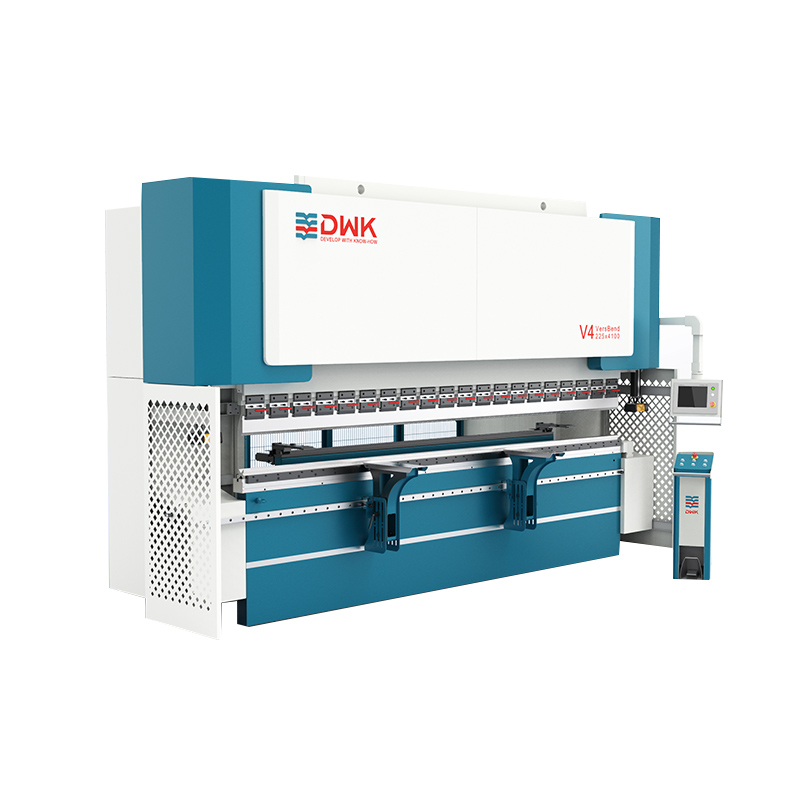
Dirty or improperly seated tools create compounding angular errors down the line. A tiny piece of debris under a die translates to a massive angle deviation on a long bend. Execution standards matter.
Cleaning forms the foundation of alignment. Wipe down the punch tangs, die shoulders, and the entire machine bed. You must remove all debris, oil buildup, or mill scale. Mill scale acts like abrasive sand under pressure. It destroys tooling surfaces and ruins bending tolerances.
Seating the tools requires a specific, careful sequence. Follow these steps for accurate tool loading:
Load the upper punch segments loosely into the ram clamps.
Slide the lower die segments into the bed holder.
Bring the ram down under extremely low pressure (setting mode).
Allow the upper punch to press gently into the lower die cavity.
Fully tighten all upper and lower clamps while the tools remain engaged.
This process ensures the punch seats perfectly parallel into the die before you apply clamping force. Evaluate your current clamping systems. Manual clamping involves tightening individual set screws, which consumes valuable time. Determine if your production volume justifies upgrading to hydraulic or pneumatic tool clamping. These advanced systems allow for faster, single-button changeovers.
Finally, perform a backgauge alignment check. Visually confirm the backgauge fingers remain unobstructed. They must sit perfectly parallel to the die line. Misaligned backgauges produce skewed flanges, rendering the part useless.
Modern control units remove the dangerous guesswork from calculating bend deductions and ram depth. Scalability and automation define modern fabrication. Setting up a fully digital CNC Press Brake drastically speeds up the transition from idle to productive output.
Inputting variables requires exact attention to detail. Enter the specific material thickness, bend length, target angle, and tooling dimensions into the main controller. The software uses these numbers to calculate the exact stopping point of the Y-axis.
Utilize the CNC software to simulate the bending sequence. Digital bend sequencing identifies potential physical collisions between the part and the machine frame before you ruin material. You can flip the part orientation on screen to find the safest handling method.
Configure the CNC crowning system. When massive force pushes down, the center of the machine bed naturally deflects downward. Crowning pushes the center of the bed upward to compensate for this deflection. Whether you use automated hydraulic crowning or manually set wedge crowning, adjust it properly to ensure an even bend angle across the entire length of the part.
Programming Method Comparison | ||
Feature Focus | Manual Machine Entry | Offline 3D Programming |
|---|---|---|
Machine Downtime | High (Operator programs while machine idles) | Low (Program uploaded instantly) |
Collision Detection | Basic 2D visual or physical trial | Advanced 3D simulation alerts |
Setup Speed | Slow (Dependent on operator skill) | Fast (Parameters pre-calculated) |
If programming directly at the machine causes unacceptable production downtime, carefully evaluate the transition to offline 3D programming software. Offline systems allow engineers to verify feasibility while the machine continues bending other parts.
Theoretical parameters rarely yield a perfect first part. Material springback and subtle thickness tolerances alter the final angle. Success criteria rely entirely on physical validation.
Execute the trial run carefully. Always use a scrap piece taken from the exact same material batch intended for full production. Using a random piece of steel off the floor invalidates your test, as yield strengths differ between lots.
Implement a strict measurement protocol for the test piece. Measure the resulting flange lengths using newly calibrated calipers. Measure the physical bend angle using a high-precision digital protractor. Check the angle at both ends and the exact center of the bend line.
You must apply springback compensation. Metals naturally flex back toward their original flat state after the punch releases pressure. Adjust the ram depth (Y-axis) in the controller to over-bend the material precisely enough to compensate for this measured springback. For example, hitting a 90-degree target in stainless steel often requires driving the punch to an 88-degree depth.
Locking the SOP marks the final step. Once the trial part passes quality control, save the finalized program parameters. Document the specific tool locations on a physical or digital setup sheet. Transition the machine into full production mode.
A disciplined setup procedure maximizes the ROI of a Press Brake by minimizing scrap, protecting expensive tools, and ensuring operator safety.
Cleanliness and alignment determine your baseline accuracy. Never skip wiping down the bed and tooling prior to clamping.
Test bends remain mandatory. You must compensate for specific material springback before running large volume batches.
Conduct periodic audits of your floor setup times to identify mechanical bottlenecks.
Implement formalized operator training programs focusing on blueprint reading and precise measurement protocols.
Assess whether legacy machines waste too much setup time. Upgrading to advanced automated equipment often resolves chronic production delays.
A: You calculate required tonnage using a standard industry formula: Force equals a material constant multiplied by thickness squared, multiplied by the bend length, all divided by the V-die opening width. Because material yield strengths vary significantly, we highly advise operators to consult manufacturer tooling load charts rather than relying solely on manual math.
A: Manual setups require operators to physically adjust limit switches, set backgauge blocks by hand, and calculate depth manually. CNC setups rely entirely on digital parameter input. The control unit automatically positions the backgauge and calculates exact ram depth, drastically reducing manual mechanical adjustments and human error.
A: Inconsistent angles typically stem from external variables. Common culprits include severe tooling wear, microscopic variations in material thickness, or shifting material grain direction. Inadequate crowning also causes the center to bow. If you rule out these issues, the machine frame likely requires professional laser recalibration.
A: Standardize your tooling profiles across common jobs to eliminate unnecessary changeovers. Utilize offline programming software so the machine never sits idle while operators perform math. Adopt pneumatic or hydraulic quick-release clamping systems to minimize the physical manual labor involved in swapping heavy dies.


