
Please Choose Your Language
- All
- Product Name
- Product Keyword
- Product Model
- Product Summary
- Product Description
- Multi Field Search
TEL : +86-18920692288
Email : dwk0002025@163.com
Views: 0 Author: Site Editor Publish Time: 2026-06-10 Origin: Site


High scrap rates, prolonged setup times, and operator bottlenecks often stem from outdated forming equipment. However, a full machine replacement isn't always financially viable. For shops relying on structurally sound frames, targeted subsystem upgrades provide a faster path to modern tolerances. Many facility managers struggle to balance capacity demands against tight capital budgets. Outdated machinery creates a severe drag on overall production throughput. Strategic investments in controls, backgauges, and tooling can fully modernize your current setup. You just need to evaluate the baseline condition of your machinery and the expected returns of the upgrade. Read on to discover the top strategies to maximize your fabrication efficiency.
Evaluate Before Upgrading: A controller retrofit cannot fix a bent bed or compromised ram; structural integrity is a mandatory prerequisite.
CNC Upgrades Drive ROI: Transitioning to a CNC press brake control system dramatically reduces setup times and mitigates the skilled-labor shortage.
Precision is Component-Dependent: Multi-axis backgauges and automated crowning systems are the fastest ways to eliminate angle variations and scrap on complex parts.
Tooling & Safety Boost Throughput: Quick-release clamping and laser guarding systems improve cycle times while maintaining strict safety compliance.
Modernizing a Press Brake requires a strict structural baseline assessment. You must define clear criteria before considering any upgrade candidate. A warped machine frame yields zero return on investment. Upgrading worn electronics cannot compensate for severe mechanical degradation.
You should inspect several mechanical factors prior to committing funds:
Ram and Bed Parallelism: Ensure the ram remains parallel to the bed under load.
Hydraulic Cylinder Health: Check for internal scoring or leaking seals.
Gib Clearance: Measure the guiding system tolerances for excessive play.
Next, perform a rigid financial evaluation. Compare the capital expenditure of targeted retrofits against purchasing a new machine. You must factor in hidden costs. A new machine purchase often involves expensive rigging. You might also face costly foundation work and extended downtime. Retrofits typically bypass these hidden expenses entirely.
Establish clear metrics for post-upgrade success. Do not upgrade simply for the sake of new technology. You might target a 30% reduction in setup time. Alternatively, you could aim for an angular variance drop to within ±0.5 degrees. Measurable criteria ensure your investment pays off in real production environments.
Common Mistake: Many production managers ignore underlying hydraulic wear. They install advanced controls on leaking cylinders. This guarantees inconsistent bend angles despite the new software.
Upgrading to a modern touch-screen CNC Press Brake controller changes everything. It shifts the burden of precision away from the operator. Physical feel and guesswork vanish. Calculated software algorithms handle bend deductions and tonnage limits. This transition helps mitigate the severe skilled-labor shortage facing modern fabrication shops. New operators learn visual touch-screen interfaces much faster than older numerical keypads.
Offline programming integration offers another massive advantage. You can program bend sequences directly in the engineering office. Engineers simulate the entire bending process on their computers. They identify collision risks before the metal ever hits the shop floor. This keeps the machine running constantly. Your machine no longer acts as an expensive programming station.
You must address specific implementation risks during a retrofit. Legacy operators often face a steep learning curve. They might resist the new touch-screen technology initially. Training is absolutely crucial. Additionally, you must verify software compatibility. Your chosen controller must communicate properly with existing hydraulic proportional valves. Mismatched signals cause erratic ram movements.
Best Practice: Always request a thorough valve-response test. The retrofit integrator should confirm your current hydraulic system can accept modern closed-loop control signals.
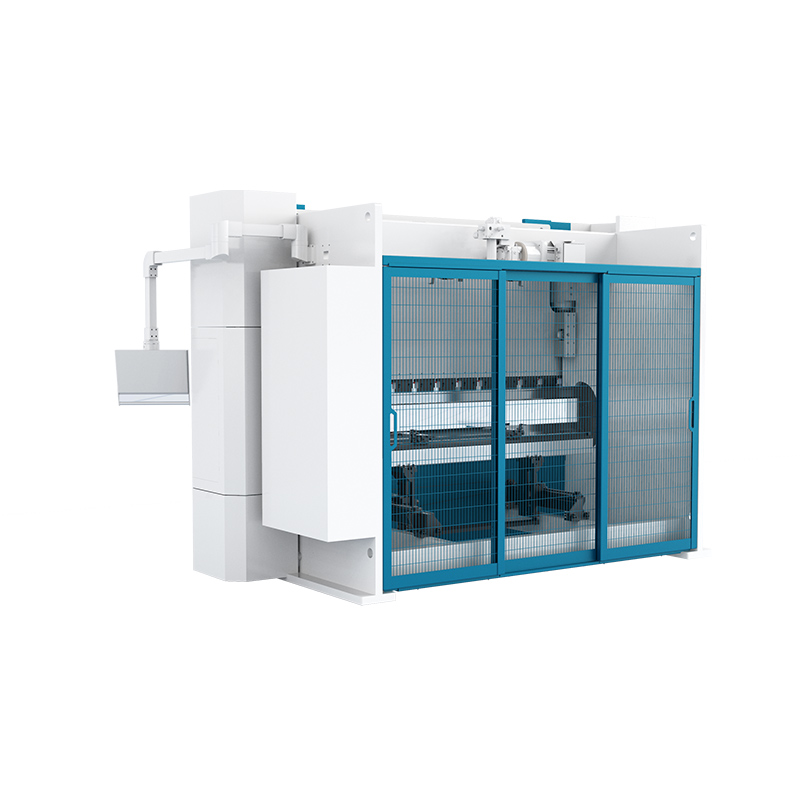
Traditional single-axis backgauges severely restrict production efficiency. An X-axis only moves forward and backward. It limits your ability to efficiently bend complex parts. Operators struggle to position multi-flange components accurately. Single-axis systems force operators to fabricate custom physical stops. This wastes valuable production time and introduces severe human error.
Upgrading to multi-axis systems transforms operational capabilities. A 4-axis or 6-axis system fundamentally changes how you stage parts. You can stage multiple tooling sets across the entire bed length. The backgauge fingers move independently to accommodate staggered tool heights. We highly recommend evaluating these advanced configurations for complex workflow environments.
Consider the operational impact shown in the comparison below.
System Type | Available Axes | Ideal Application | Setup Time Impact |
|---|---|---|---|
Single-Axis | X | Simple linear bends, single setups | High manual adjustment time |
4-Axis | X, R, Z1, Z2 | Asymmetric parts, multi-tool staging | Moderate to low intervention |
6-Axis | X1, X2, R1, R2, Z1, Z2 | Complex geometries, independent part gauging | Minimal manual intervention |
Your primary outcome focus should be reduced part handling. Multi-axis systems mean fewer tool changes per part. Operators complete an entire complex component in one handling sequence. These advanced gauges also nearly eliminate reverse-bending positioning errors. The fingers move dynamically to support the changing geometry of the workpiece.
Forming thick plate introduces severe deflection issues. When operating a Heavy Duty Press Brake, the machine frame flexes under high tonnage. The ram pushes down, and the bed pushes up. Both components bow outward in the center. This physical reality causes the dreaded "canoe effect." Parts end up over-bent on the ends and under-bent in the middle. Manual shimming wastes hours of valuable setup time.
You have two primary solutions for machine deflection. Manufacturers utilize either hydraulic crowning or CNC mechanical crowning wedges.
Hydraulic Crowning: Integrated directly into the machine bed. It uses hydraulic cylinders to push the center of the bed upward. It reacts quickly but is difficult to retrofit onto older frames.
Mechanical Crowning: Uses a series of precision-machined wedges. A motor drives these wedges to create a controlled physical arc. It provides highly localized adjustments.
Our decision matrix heavily favors mechanical crowning table upgrades. They offer the most reliable and cost-effective retrofit. You simply bolt them onto the existing machine bed. They integrate seamlessly into the new CNC controller. The controller calculates the exact tonnage required. It then automatically adjusts the mechanical wedges to perfectly counteract the frame deflection. This eliminates manual shimming entirely.
Common Mistake: Attempting to bend high-tensile materials without a crowning system. The extreme tonnage required will permanently damage standard tooling and produce highly inconsistent parts.
Hydraulic tool clamping represents a massive throughput enhancement. Older machines rely on manual set screws. Operators spend hours manually loosening and tightening individual tool segments. Transitioning to push-button hydraulic or pneumatic seating changes this dynamic completely. You can utilize Wila or Trumpf-style clamping systems. These modern systems cut tool changeovers from 20 minutes to just 2 minutes. The system automatically seats and aligns the punches perfectly.
Active laser safety systems provide another critical upgrade path. Older physical light curtains slow down operation significantly. They restrict close-proximity work. Operators must constantly mute the curtains to bend small flanges. Moving to active moving-laser guarding systems, like LazerSafe, resolves this bottleneck. The laser travels downward directly below the punch tip.
Modern laser safety systems satisfy strict OSHA requirements. More importantly, they actually increase your overall bend speeds. Physical light curtains force the machine into a slow pressing speed very early in the stroke. Moving-laser systems allow the ram to stay in rapid-approach mode much longer. The ram drops quickly, only slowing down millimeters above the material. This drastically reduces the total cycle time per part.
Choosing the right retrofit partner dictates the success of your upgrade. You must evaluate vendors across several strict dimensions. Demand a proven integration track record. Ask for references from similar fabrication shops. Prioritize local support capabilities. A system failure halts production instantly, so prompt technician availability matters. Investigate whether the vendor uses open-source or proprietary components. Open-source components ensure long-term parts availability.
You must develop strategic downtime phasing. Upgrades inevitably require taking the machine offline. Plan carefully to avoid crippling your shop floor capacity. Stagger the upgrades if possible. Install the new tooling clamps during one weekend. Schedule the controller and backgauge retrofit for a naturally slow production week. Build a buffer of critical inventory before the machine powers down.
Take specific next-step actions before soliciting upgrade quotes. Conduct a full laser-alignment test on the current frame. Perform a comprehensive hydraulic pressure audit. Document your current cycle times. Provide these baseline metrics to your chosen vendors. Accurate data allows integrators to quote the exact components necessary for your specific machine.
Upgrading a press brake offers a surgical approach to modernizing fabrication capabilities. You bypass the massive capital expenditure of a brand-new machine while unlocking comparable software and positioning speeds. However, technology only amplifies existing conditions. Excellent electronic controls require excellent baseline mechanical frames. You cannot solve physical structural failure through a touch-screen interface.
Production managers should initiate action immediately. Start with a rigid audit of your current machine's physical tolerances. Verify the parallelism and hydraulic health. If the bones are solid, commit your budget to electronic and subsystem upgrades. Implementing CNC controllers, multi-axis gauges, and fast clamping will fundamentally transform your shop floor efficiency. Do the math, audit your equipment, and modernize your fabrication processes today.
A: While technically possible, converting older mechanical flywheel brakes is dangerous. They lack the rapid stopping capabilities required by modern safety standards. You should only consider retrofitting hydraulic or servo-electric models. These machines support the closed-loop proportional valve upgrades necessary for precise CNC positioning.
A: You should expect 1 to 2 weeks of dedicated downtime. The exact duration depends heavily on the complexity of the backgauge installation and wiring requirements. We strongly advise building a two-week production buffer of fabricated parts before taking the machine offline.
A: No. You rarely need to modify the actual machine ram. You can easily purchase specialized adapters. These adapters fit modern European or New Standard tooling directly into American traditional tang rams. This approach completely avoids expensive, permanent machining on your equipment.


