
Please Choose Your Language
- All
- Product Name
- Product Keyword
- Product Model
- Product Summary
- Product Description
- Multi Field Search
TEL : +86-18920692288
Email : dwk0002025@163.com
Views: 0 Author: Site Editor Publish Time: 2026-06-08 Origin: Site


You can see four main types of press brake machines in factories. These are mechanical, hydraulic, electric, and hybrid. Each one bends metal in a different way. CNC and manual are about how you use the machine. They are not types of machines. But both are important for how much work your shop can do. Today, hydraulic press brakes are used more than half the time around the world. Electric models are becoming more popular because they save energy and are very exact. DWK Machine Tool (Tianjin) Co., Ltd. has many advanced press brake choices for your needs.
There are four main types of press brake machines. These are mechanical, hydraulic, electric, and hybrid. Each type is good for different jobs. Each one has its own special benefits.
Pick the right press brake for your work. Think about what material you use. Check the thickness of your material. Think about how much you need to make. Look at things like bending length and tonnage. This helps you get the best results.
CNC press brakes are very accurate and fast. They are good for hard jobs. They help save time and stop mistakes. This makes them great for factories with many kinds of work.
Electric press brakes use less energy. They do not need much fixing. They are good for clean places. They are best for jobs that need very exact bends.
Talk to suppliers like DWK Machine Tool for help. They can help you pick the best press brake for your shop. They will help you find the right machine for your bending jobs.
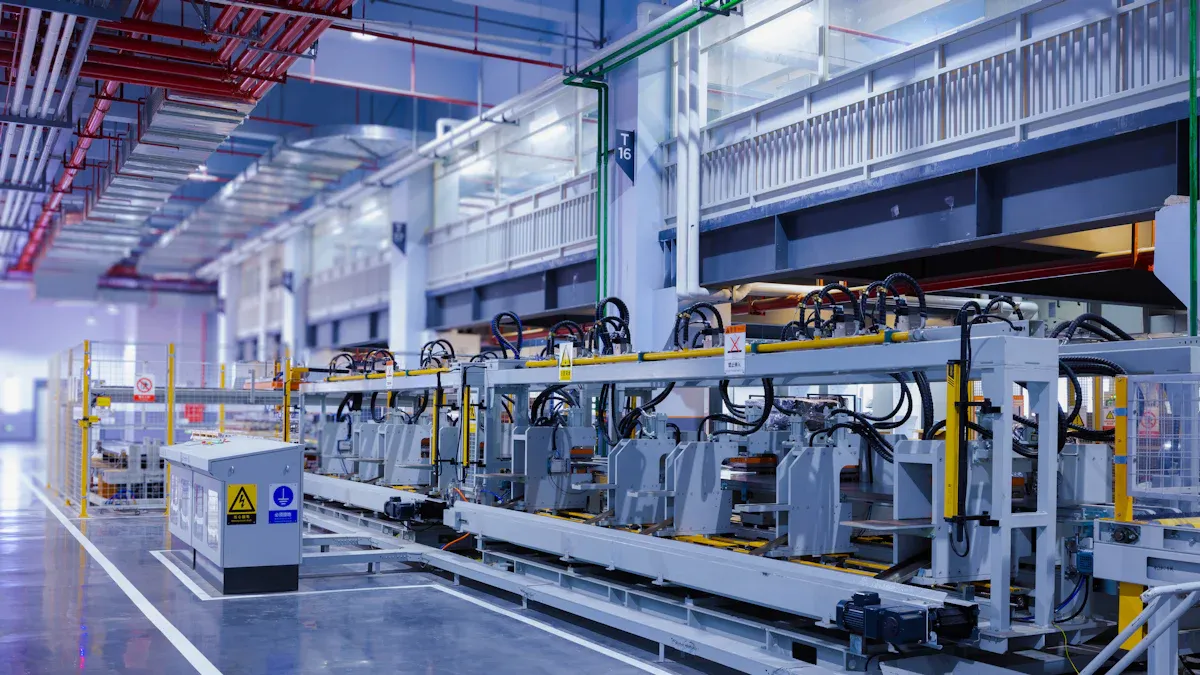
There are four main types of press brake machines used today. Each type bends sheet metal in its own way. You should pick the right one for your job. Think about what you need to make, what material you use, and how exact you want your bends. DWK Machine Tool (Tianjin) Co., Ltd. has many models. You can find a press brake that fits your work.
Tip: If you know how each press brake works, you can pick the best one for your shop.
Type | Working Principle | Advantages | Disadvantages |
|---|---|---|---|
Mechanical | Uses a clutch and flywheel to store energy. | Makes strong bends, easy to control, works with many materials. | Hard to change speed, needs lots of care. |
Hydraulic | Moves the upper beam with hydraulic cylinders. | Can change speed, easy to use, bends thick metal well. | Costs more, takes up more space, is heavy. |
Electric | Runs only on electricity, no hydraulics. | Good for the planet, saves money, very safe and accurate. | N/A |
Hybrid | Mixes parts of hydraulic and electric machines. | Saves energy, good for the earth, works with less power. | N/A |
Mechanical press brakes use a flywheel and clutch to bend metal. You move the ram with a foot pedal. This machine gives strong force and makes the same bend every time. You can use it to make door frames, window frames, and metal boxes.
You need to oil and check the clutch often to keep it working well. Here are the main things you need to do:
Maintenance Task | Description |
|---|---|
Lubrication | Oil the machine often. |
Clutch Inspection | Check the clutch sometimes. |
Shops that do a lot of bending use these machines. They are good for simple bends and making many parts fast. But you will spend more time fixing and caring for them than other types.
Hydraulic press brakes use hydraulic cylinders to move the top part. You can change the speed and get a lot of bending power. These machines are easy to use and can bend thick metal. People use them to make car parts, airplane parts, and pipes for buildings.
New hydraulic press brakes have smart systems. These help you bend metal very exactly, even as close as ±0.0004 inches. You can also let the machine do some jobs by itself. This helps you work faster and make fewer mistakes. Safety tools like light curtains and sensors keep you safe.
Hydraulic press brakes only use power when bending. This saves money. For example, a normal hydraulic press brake uses about 60 kWh in eight hours. This makes it a good choice for many shops.
Note: DWK Machine Tool has hydraulic press brakes with better hydraulics, guided rams, and safety tools.
Electric press brakes use only electricity. You do not need oil, so there are no leaks. These machines are the most exact and repeatable in press brake technology. You can change the stroke fast. This makes them great for jobs that need perfect bends and quick work.
You see electric press brakes in places that need clean work, like medical and electronics factories. They use only 12 kWh in eight hours. That is about 80% less than a hydraulic press brake. You also do not need to fix them as much because there are no hydraulic parts.
Electric press brakes can change tools by themselves, control angles, and have smart back gauges. You can use a cad/cam system to set how to bend and in what order for hard jobs.
Hybrid press brakes mix the best parts of hydraulic and electric machines. A servo motor runs the hydraulic pump. The motor works only when the ram moves. This saves energy and keeps the machine cool. You get strong power, exact bends, and smooth movement.
A hybrid, or servo-hydraulic, system uses a servo-driven pump instead of a motor that always runs. The motor only spins when the ram moves. If the ram stops, the motor stops too. This keeps the machine from getting too hot and helps the parts last longer.
Hybrid press brakes are good for shops that want to make more parts but do not have more space. These machines are easy to use and can do jobs by themselves. This helps companies that hire new workers. You can use hybrid press brakes for furniture, building, and jobs that need both power and accuracy.
DWK Machine Tool has hybrid models that save energy, work well, and have smart angle controls. You can trust these machines to bend metal the same way every time.
Summary: Each press brake type has its own good points. Think about your material, how much you need to make, and if you want automation before you choose. DWK Machine Tool has many press brake machines, including servo press brakes, to fit what you need.
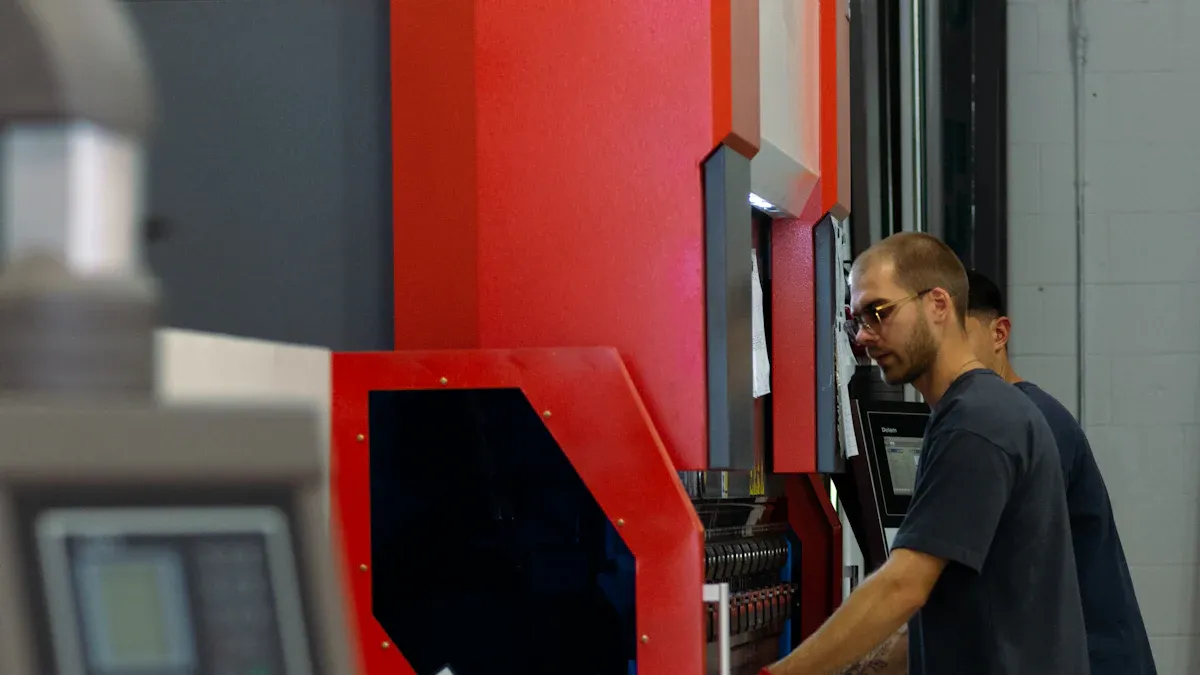
When you pick a press brake, you also choose how to control it. There are two main ways to run the machine: CNC and manual. Each way changes how you get ready, use, and finish your bending jobs.
CNC press brakes use computers to help with every step. You put your design into the machine. The computer follows your plan very closely. This kind of control lets you save programs for different parts. You can change jobs fast. Every part comes out the same, even if you make a lot.
Here is a table that shows how CNC and manual press brakes are different:
Feature | NC Press Brakes | CNC Press Brakes |
|---|---|---|
Setup Time | Takes longer to set up by hand | Sets up faster with saved programs |
Production Efficiency | Slower for short jobs and when you switch parts | Makes more parts quickly and keeps the speed steady |
Precision | Medium accuracy, bends can be a little different | Very accurate, bends are always the same |
Ideal Use Case | Good for long jobs that repeat | Good for fast work or lots of different parts |
You should use a CNC press brake if you need to make hard shapes, work with many kinds of parts, or want to finish jobs quickly. Many factories use CNC press brakes for cars, planes, and electronics because they need perfect bends and fast changes.
CNC press brakes are best for:
Hard and very exact jobs
Making many types of parts
Big jobs that need to be fast and right
Manual press brakes need you to do everything by hand. You move the stops, set the angles, and adjust the back gauge yourself. This takes more time and skill. Manual press brakes are good for easy bends and making the same part over and over. You get good results if you do not need to change jobs a lot.
If your shop is small or you make the same thing every day, manual press brakes can work well. You spend less money on the machine. You do not have to learn computer controls. But you might spend more time getting ready and checking your work.
Tip: Pick manual press brakes for simple jobs, when you do not change parts much, and when you want things to stay easy.
Mechanical press brakes are easy to use. They help you start press brake forming. You can put them together without trouble. They bend steel up to 1/4 inch well. You can change or take off the fingers for different jobs. These machines are good for hemming and making shapes. They work for making many parts and for testing new designs. You can also use them with automation.
Pros | Cons |
|---|---|
Easy to put together | |
Works well with steel up to 1/4" | Needs people to set up and run |
Fingers can be changed or removed | Not as strong as hydraulic presses |
Can do many bending jobs | Might need extra parts |
Mechanical press brakes help you make boxes and panels. You can use them for testing new parts. They are good for bending the same way many times. You can bend at different angles. They let you do many sheet metal jobs.
Hydraulic press brakes use hydraulics to move the ram. They give strong bending power. You can change how fast they bend. They are very exact when forming metal. These machines are good for making lots of parts. People use them in car and airplane factories. They save energy and waste less material.
Sometimes, you might see oil leaks or pressure problems. The ram can drift, bends can be wrong, or the machine can be loud. You can fix these by checking oil, looking at seals, and keeping things clean. New sensors and smart tools help you find problems fast.
Hydraulic press brakes make many parts quickly. They do not need much fixing. They are best for thick sheet metal. They are good if you want smart angle control.
Electric press brakes use only electricity to bend metal. They save energy because they use power only when bending. For example, a 100-ton electric machine uses about 12 kWh in eight hours. A hydraulic machine uses 60 kWh in the same time. You spend less money fixing them. Over five years, you can save $3,500 compared to hydraulic machines.
Electric press brakes are very exact. They change angles fast. You can use them for thin and medium sheet metal. They are best for clean places like electronics or medical factories. But they cannot bend thick metal as well. They need steady power and cost more to buy. They use big ball screws for strong bends. These screws can be sensitive if the load is not centered.
Hybrid press brakes mix hydraulics and electric systems. They save energy and move smoothly. They stay cool when working. These machines keep strong force for tough jobs. You can use them for jobs that need high precision and different amounts of parts. Hybrid press brakes have smart angle control. They keep pressure the same across the die and punch.
You pay more at first and need special help to fix them. It can be harder to find problems. Still, you get the good parts of hydraulic and electric press brakes. They are a great choice for modern sheet metal shops.
Tip: When picking a press brake, think about what you need to bend, the kind of sheet metal, and if you want manual or cnc press brakes. Always check the back gauge, angle control, and control features. This helps you get the best results from your machine.
You need to look at several important factors before you pick a press brake for your shop. Here is a simple list to help you:
Bending length: Check the longest sheet metal you want to bend. The press brake must be long enough for your parts.
Tonnage: Think about the force needed for bending. Softer metals need less force. Stainless steel needs more.
Material thickness: Different metals bend in different ways. Thicker sheet metal needs a stronger press brake.
Operator skill level: Some press brakes need skilled workers. Others use automation and are easier to run.
Tip: DWK Machine Tool offers press brakes with different tonnage and bending lengths. You can find models for thin or thick sheet metal.
You should match the press brake to your production needs. Here are some best practices:
Manual press brakes work well for high-volume runs with the same bends. You adjust the bending angle and size by hand.
Hydraulic press brakes give you controlled and steady bending. They work for many materials and jobs.
CNC press brakes offer the best precision and repeatability. You enter bending details into the controller. This reduces setup time and mistakes. CNC models are great for complex shapes and multi-bend jobs.
Electric press brakes save energy and give exact bends. They are good for lighter sheet metal and clean environments.
DWK Machine Tool has press brakes with CNC controls, smart backgauges, and fast tool changes. These features help you get the right bends every time.
Many shops make mistakes when choosing a press brake machine. Here are some things to watch out for:
Underestimating the tonnage needed for bending can cause problems.
Overspending on a bigger press brake than you need wastes money.
Placing holes or features too close to the bend can distort the sheet metal.
Choosing a bend radius that is too tight may break the material.
Not using a tonnage chart leads to errors in bending force.
Always check your bending needs and use a tonnage chart. Ask DWK Machine Tool for help if you are not sure.
When you pick a press brake, you want to see the differences fast. This summary helps you compare the main types of press brake machines. You can use these tables and tips to find the best one for your shop.
Here is a table that shows how each press brake type compares for cost, speed, and precision:
Type | Cost Characteristics | Speed Characteristics | Precision Characteristics |
|---|---|---|---|
Mechanical | Lowest starting cost for making lots of one product | Works best for fast, repeated jobs | Medium precision |
Hydraulic | Good for many jobs, works well overall | Medium speed | Good precision |
Electric | Costs more at first, but saves energy later | Not as fast as mechanical, but very exact | Best precision for thin metal |
Hybrid | Medium starting cost, uses less energy | Faster cycles | Good precision with strong power |
Electric and hybrid press brake systems help you save energy. You also get faster cycles and less waste when you need high precision for bending.
You should always think about the five-year costs. These include energy, fixing, tools, and workers. Hydraulic press brake machines are popular because they give strong power, flexibility, and save money.
The right press brake depends on what you want to make. Here is a quick guide:
Type of Press Brake | Recommended Use Cases |
|---|---|
Mechanical | Structural steel, cars, planes, HVAC ductwork |
Hydraulic | Thick plate bending, aluminum shapes, pipe and tube bending |
Electric | Electronics, medical devices, thin metal that needs exact bends |
Hybrid | Furniture, building, jobs needing both power and accuracy |
Mechanical press brake machines are best for fast, repeated bending.
Hydraulic press brake models work with thick metal and hard shapes.
Electric press brake units give the best accuracy for thin materials.
Hybrid press brake systems mix energy savings with strong, exact bending.
Tip: Match your press brake to your main bending jobs. This helps you get better results and save money.
You have learned about four main types of press brake machines and how you can control them. When you choose a press brake, you should:
Think about the size and thickness of your metal sheets.
Pick the right tonnage for your jobs.
Decide if you need hydraulic, mechanical, or electric power.
Look for CNC controls if you want easy setup and high accuracy.
Check that the machine fits your budget and offers good support.
You can talk with trusted suppliers like DWK Machine Tool to find the best solution for your shop.
You control a CNC press brake with a computer. Manual press brakes need you to set everything by hand. CNC machines make bending faster and more accurate.
You should look at your material, thickness, and how many parts you make. Electric press brakes work well for thin metal. Hydraulic models handle thick sheets.
Yes, you can bend aluminum and stainless steel with most press brakes. You must check the machine’s tonnage and choose the right tools for each metal.
You should look for light curtains, foot pedal controls, and clear sightlines. These features help you stay safe while bending metal.


