
Please Choose Your Language
- All
- Product Name
- Product Keyword
- Product Model
- Product Summary
- Product Description
- Multi Field Search
TEL : +86-18920692288
Email : dwk0002025@163.com
Views: 0 Author: Site Editor Publish Time: 2026-05-06 Origin: Site


Acquiring a Press Brake represents a major multi-decade capital expenditure (CapEx) requiring precise lifecycle forecasting. Undefined equipment lifespans ruin Total Cost of Ownership (TCO) models. Unplanned downtime increases drastically when operators rely on structurally fatigued machinery. This fatigue fundamentally compromises bend accuracy and part repeatability. A machine's operational lifespan is a composite of its control system, electrical cabinet, hydraulics, and steel frame. These subsystems degrade at vastly different rates. Understanding these wear patterns prevents shops from throwing maintenance dollars at a machine destined for the scrapyard. This guide provides technical baselines for lifespan expectations across different drive systems. We outline primary failure points and establish the exact financial triggers that justify replacing versus retrofitting your equipment. These baselines apply directly whether you are sizing up brand-new assets or auditing secondary market machinery.
Baseline Expectation: A well-maintained press brake operating on a single-shift schedule typically lasts 15 to 20 years, though the structural frame can endure 30+ years under proper tonnage limits.
The Obsolescence Gap: CNC controls and proprietary software generally become obsolete or unsupported within 7 to 10 years, requiring retrofits long before mechanical failure.
Application Dictates Wear: Heavy duty press brake applications involving continuous bottoming or coining degrade machine geometry significantly faster than standard air bending.
Maintenance Drives Longevity: Preventative maintenance (specifically hydraulic fluid purity, daily inspections, and gib adjustments) alters the depreciation curve more than the initial brand quality.
The Secondary Market Reality: Buying a used press brake requires evaluating remaining operational hours rather than calendar age, prioritizing frame geometry and control supportability.
Professional fabricators track machinery lifespan in operational hours, never calendar years. A machine sitting idle ages completely differently than a unit bending thick steel plate across three shifts. We base baseline lifespan metrics on a standard single-shift environment running approximately 2,000 operational hours per year. Under these conditions, the mechanical components of a standard hydraulic setup endure minimal thermal stress. The wear curve remains gradual and highly predictable.
However, running a high-volume 24/7 robotic bending cell accelerates component fatigue massively. A cell logging 6,000 hours annually burns through its prime operational life three times faster than a single-shift counterpart. Calendar age deceives buyers. Spindle time and pump run-time dictate actual internal wear.
Operational Environment | Annual Hours | Estimated Prime Lifespan | Primary Wear Vector |
|---|---|---|---|
Single Shift (Light/Medium Duty) | ~2,000 hrs | 15 - 20 Years | Control obsolescence, minor seal leaks. |
Double Shift (Continuous) | ~4,000 hrs | 10 - 12 Years | Pump wear, proportional valve scoring. |
24/7 Robotic Automation Cell | ~6,000+ hrs | 5 - 8 Years | Ball screw fatigue, servo drive burnout, heat load. |
Actuation technologies offer distinctly different longevity profiles. You must evaluate the drive system independently from the steel frame.
Hydraulic systems average 15 to 20 years before requiring a massive overhaul. You will inevitably face seal degradation, internal pump wear, and valve block fatigue. Heat and pressure shear the hydraulic fluid constantly. This process hardens O-rings and introduces microscopic metal shavings into the closed loop. Once the proportional valves score, holding ram parallelism becomes impossible without a complete rebuild.
Electric and servo-driven machines follow a different trajectory. Expect 10 to 15 years of peak precision for the core servo motors and heavy-duty ball screws. Their lifespan heavily depends on load consistency and shop cleanliness. Abrasive dust settling onto a precision ball screw quickly ruins its pitch accuracy. Conversely, mechanical flywheel-driven machines can endure 30+ years of abuse. We consider them entirely obsolete for modern precision work due to inherent safety risks and a lack of precise stroke control.
Auditing machinery on the secondary market demands an objective, systematic approach. Never trust a fresh coat of paint. You need to verify structural geometry and control supportability immediately.
Check for Permanent Bed Deflection: Place a precision straight edge across the entire length of the lower bed. Look for irreversible bowing in the center. Operators overloading the center of the machine cause this damage. A bowed bed requires constant shimming to achieve straight bends.
Assess OEM Part Availability: A perfectly straight steel frame holds zero value if the proprietary servo drive is out of production. Call the manufacturer with the serial number to confirm they still supply motherboards and safety laser components.
Review Historical Maintenance Logs: Verify true remaining operational hours by auditing service records. Consistent hydraulic fluid changes and annual geometric calibration reports indicate a healthy machine. Missing logs usually point to reactive maintenance, meaning the machine was run to failure repeatedly.
Inspect the Ram Gibs: Look for deep scoring or asymmetrical wear on the guide rails. Heavy scoring means the ram ran dry without lubrication or suffered chronic off-center loading.
The machine's brain typically fails long before its mechanical muscle gives out. PC-based and proprietary controllers operate on a harsh 7-to-10-year hardware lifecycle. A CNC Press Brake frequently faces early retirement due to software obsolescence alone. Industrial motherboards bake under continuous shop floor heat. Touch screen digitizers lose sensitivity from oily fingers or suffer direct physical impact damage.
The most pressing issue is software support. Manufacturers eventually drop updates for legacy operating systems. When an outdated Windows kernel can no longer network securely with modern CAD/CAM software, your IT department will isolate the machine. Retrofitting the CNC control becomes mandatory to maintain workflow, even if the hydraulic cylinders perform flawlessly.
Electrical components degrade invisibly over a 10 to 15-year cycle. Shop floor vibration is relentless. It slowly loosens terminal blocks, creating high-resistance connections that generate heat. Ambient temperatures bake wire insulation until it cracks, leading to intermittent shorts. Particulate ingress bypasses cabinet filters and settles directly on contactors, relays, and sensitive servo drives. Metallic dust is particularly lethal, causing sudden arc flashes across circuit boards.
Thermal stress remains a leading cause of intermittent faults. When a mechanical relay sticks or a drive overheats, the ram might pause mid-stroke or lose its Y1/Y2 axis synchronization. Troubleshooting these phantom electrical issues often costs thousands in diagnostic downtime.
Hydraulic fluid acts as both a power transmitter and a lubricant. Its lifecycle directly dictates the lifespan of the machine's proportional valves and internal cylinder seals. When oil degrades thermally, it loses lubricity. Microscopic particulate contamination then accelerates internal pump wear. Particles smaller than 5 microns act like liquid sandpaper inside precision proportional valves.
Ram positioning accuracy relies entirely on precise hydraulic pressure metering. Once the internal spools of the proportional valves score and bypass fluid, holding a +/- 0.0004 inch tolerance becomes physically impossible. Operators will complain about the ram drifting. Rebuilding a heavily contaminated hydraulic system is highly labor-intensive, often requiring complete line flushing and block replacement.
Steel bends under pressure, and eventually, it refuses to return to its original shape. Decades of heavy tonnage application permanently affect the side frames and the machine bed. Chronic overloading forces the center of the bed downward. You can no longer bend a straight part without fighting the natural curve of the fatigued steel.
Friction also degrades the ram gibs and guides. Increased clearance allows the ram to pitch forward or twist during the downward stroke. This leads to angular variations in bent parts from one end to the other. You must clarify the distinction between tooling wear and machine wear. Punches and dies degrade rapidly based on the abrasive nature of the material being formed. Worn tooling often mimics machine inaccuracy perfectly. Always baseline the machine's geometric accuracy using brand-new, precision-ground test tooling before assuming the frame is compromised.
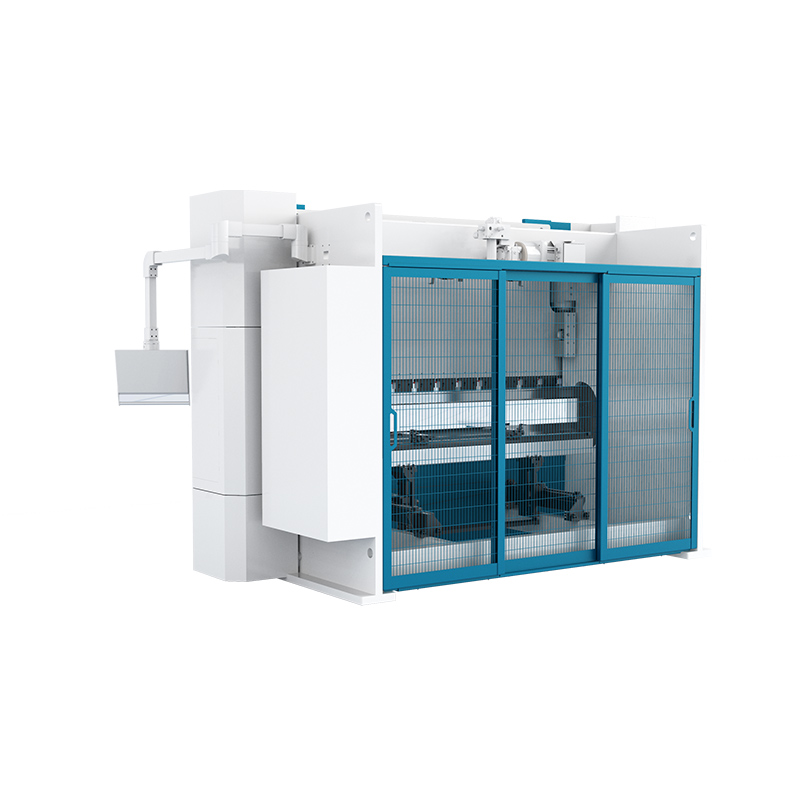
The chosen forming application dictates equipment longevity. Bottoming and coining require massive tonnage concentrated on a very small die area to stamp the material into the exact punch angle. This action creates immense shock loads. The violent release of kinetic energy upon ram reversal sends destructive shockwaves through the hydraulic lines and frame. This practice reduces structural lifespan by decades.
Air bending is the standard for modern longevity. It utilizes a fraction of the tonnage to bend the material across a V-die opening without ever bottoming out against the lower tool. Air bending preserves the structural integrity of a Heavy Duty Press Brake by keeping mechanical stresses well below the machine's absolute yield point.
Operators frequently bend small, repetitive brackets on the far left or right side of the bed. Chronic off-center bending systematically destroys heavy-duty machines. It applies vastly uneven stress to the hydraulic cylinders. One cylinder does all the heavy lifting while the opposite cylinder simply drags behind. This dynamic forces the ram to rack diagonally.
This racking creates severe, asymmetric wear on the ram gibs. The ram physically tilts over time. Uneven guide wear destroys operational accuracy entirely. Once the gibs wear down on a diagonal plane, achieving parallel Y1/Y2 bends in the center of the machine becomes nearly impossible without expensive mechanical scraping and realignment by an OEM technician.
The operating environment drastically alters heavy-duty equipment lifespan. Placing a precision brake next to a plasma cutting table or heavy welding bay guarantees rapid degradation. Abrasive airborne dust ingests into the machine daily. This dust settles on exposed linear encoders, ruining scale accuracy and causing the ram to stutter. Poor electrical power quality, including voltage spikes from nearby heavy equipment, degrades sensitive CNC components. Extreme temperature fluctuations force the machine frame to expand and contract, fighting the thermal compensation algorithms in the controller. A climate-controlled, relatively clean shop floor adds five to ten years to the functional life of heavy fabrication equipment.
Deciding when to retire an asset requires hard financial data. You need a strict framework for tracking downtime costs and repair parts against the annualized cost of a new machine. Track every single hour the machine sits idle waiting for a service technician or replacement part. Use a standard rule of thumb: when annual maintenance costs exceed 10% to 15% of the machine's current residual market value, replacement is structurally justified.
Consider a 15-year-old machine currently appraised at $40,000. If you spend $6,500 annually replacing blown seals, flushing contaminated hydraulic fluid, and hunting down ghost electrical faults, the asset has crossed the tipping point into negative ROI. The hidden cost of lost production hours will vastly exceed the monthly payment on a new machine.
Retrofitting breathes new life into solid steel. Evaluate the cost-to-benefit ratio of replacing an obsolete CNC control and completely rewiring a hydraulically sound 15-year-old frame. A comprehensive control retrofit typically costs 20% to 30% of the price of a brand-new machine of equivalent tonnage. It makes strong financial sense if the mechanical foundation is pristine.
You must outline the limitations of retrofits clearly before signing a PO. Retrofitting controls cannot fix permanent bed deflection. Installing new software cannot heal worn hydraulic cylinders, scored proportional valves, or gouged gibs. If the iron is fatigued or the hydraulics are compromised, a retrofit is a complete waste of capital.
Decision-makers need to look far beyond the initial purchase order. Use a comprehensive TCO formula to guide CapEx approvals. This model reveals the true expenses of operating fabrication machinery over a 15-to-20-year lifecycle.
Cost Category | Calculation Variable | Impact on Lifecycle ROI |
|---|---|---|
Initial Purchase Price | Base machine + specialized tooling + freight + professional rigging | Sets the baseline for standard 7-year MACRS tax depreciation schedules. |
Annual Maintenance | (Preventative parts + technician labor) x Expected Lifecycle Years | Increases exponentially after year 10; primarily drives the retrofit decision. |
Energy Consumption | Kilowatt-hours per year based on drive motor efficiency | Hydraulic gear pumps running idle consume vastly more energy than modern servo-electric drives. |
Unplanned Downtime | Lost revenue per hour x average breakdown hours annually | The absolute hidden killer of profitability on aging secondary market machines. |
Salvage Value | Estimated resale/auction value at year 15 | Deducted from total lifecycle costs. Well-maintained premium brands retain significantly higher residuals. |
Routine consistency extends mechanical life further than any other factor. Implement highly actionable maintenance checklists tailored to your shop's operations.
Daily: Operators must perform a visual inspection of all external hydraulic lines for weeping fluid. Wipe down the tooling bed thoroughly to prevent scale and debris from embedding into the lower die holder. Check safety laser alignment and wipe the lenses with optical cleaner.
Weekly/Monthly: Maintenance teams must grease the ram guides according to exact OEM specifications. Check reservoir fluid levels. Inspect and vacuum electrical cabinet filters to maintain proper ambient airflow over the servo drives.
Annual: Contract a certified OEM technician to perform full laser-interferometer alignment checks. Re-torque all high-voltage electrical connections in the main cabinet to prevent arcing. Perform a complete fluid sampling sequence to laboratory standards.
Treat hydraulic oil as a critical, precision machine component, not just a cheap consumable. Outline strict protocols for fluid sampling. Send samples to an independent lab annually to test for water ingress, oxidation levels, and exact particulate counts. Adhere to rigid filtration schedules.
Installing an offline bypass filtration system cleans oil down to 1 micron, vastly extending the operational life of proportional valves. Operating temperature management is equally critical. Ensure heat exchangers and cooling fans function correctly. Hydraulic fluid running constantly above 140°F (60°C) breaks down chemically, destroying the lubricating film that protects internal pump bearings.
Holding precision relies entirely on rigid geometry. Detail the necessity of annual or bi-annual gib clearance adjustments to maintain ram parallelism. As the synthetic guides wear naturally, technicians must tighten the clearances to prevent the ram from twisting under a heavy load.
Inspect the crowning system calibration regularly. Whether utilizing mechanical CNC wedges or hydraulic cylinders built into the bed, the crowning system must offset natural machine deflection perfectly. If the crowning wedges bind due to a lack of grease, operators will chase bend angles endlessly across the length of the part, wasting material and time.
The machine operator remains your first line of defense against premature machine failure. Tooling choices directly impact structural health. Outline the severe risk of using worn dies or improper V-openings. Exceeding maximum tonnage limits causes immediate, permanent structural damage.
Train operators strictly on the "tonnage per foot" rule. Attempting to bend a short, thick piece of material requires massive concentrated tonnage. Localized bed areas cannot support this stress without yielding. Operator error and improper tooling setups, not inherent mechanical defects, cause the vast majority of premature frame fatigue.
The path to maximizing a press brake's operational lifespan relies on proactive fluid management, strict tonnage limits, and timely CNC retrofits. Act now to secure the longevity of your fabrication assets with the following next steps:
Audit all secondary market or legacy machines over 10 years old using a laser-interferometer to measure actual bed deflection and frame accuracy.
Establish a mandatory annual hydraulic fluid testing protocol through a certified lab to monitor particulate counts and oxidation levels.
Calculate your current unplanned downtime costs to determine if an electrical and CNC control retrofit is mathematically justified this quarter.
Implement strict, documented "tonnage per foot" training for all operators to prevent concentrated shock loads and asymmetrical gib wear.
A: A well-maintained machine holds prime bending accuracy for 10 to 15 years. However, proprietary software and PC-based controllers generally face obsolescence within 7 to 10 years, often requiring an electronic retrofit before the mechanical systems fail.
A: Check for permanent bed deflection using a straight edge. Inspect the cylinders for hydraulic leaks. Confirm the CNC software still receives OEM support. Always request historical maintenance logs to verify actual operational hours rather than relying on calendar age.
A: Yes, if the core mechanical foundation is sound. Retrofits make financial sense when the hydraulic system and frame geometry remain intact, but the control is obsolete. It generally costs 20% to 30% of a new machine.
A: Hydraulic fluid contamination is the leading mechanical killer, destroying proportional valves. Electronic component overheating due to poor cabinet filtration and chronic off-center bending causing asymmetric gib wear are also primary culprits.
A: The standard industry baseline recommends changing the fluid every 2,000 to 3,000 operating hours. However, best practice is to dictate changes based on rigorous annual oil sampling results testing for particulate and viscosity breakdown.
A: Heavy duty models are over-engineered for high-tonnage tasks. However, their lifespan drops rapidly if subjected to frequent shock loads from coining, improper concentrated tooling setups, or harsh environmental particulate like abrasive welding dust.
A: For tax purposes, businesses typically use a standard 7-year MACRS depreciation schedule. However, actual mechanical depreciation spans 15 to 20 years, depending on shift volume, maintenance rigor, and application severity.


