
Please Choose Your Language
- All
- Product Name
- Product Keyword
- Product Model
- Product Summary
- Product Description
- Multi Field Search
TEL : +86-18920692288
Email : dwk0002025@163.com
Views: 0 Author: Site Editor Publish Time: 2026-06-01 Origin: Site


Upgrading or selecting a CNC Press Brake controller is not just a simple hardware decision. It dictates cycle times, setup efficiency, and operator training requirements on your shop floor. Today's fabrication floors demand rapid turnarounds and high precision. Outdated systems simply cannot keep pace with these modern demands. Whether you are specifying a new machine or planning a complex retrofit to replace older NC systems, making the right choice is crucial. The right controller effectively bridges the gap between raw mechanical capability and daily production reality. It acts as the brain behind the physical brawn. Without a capable computing brain, even the sturdiest hydraulic press severely underperforms. This guide breaks down the major industry-standard controller ecosystems. We will explore specific evaluation criteria based on various production types. We also uncover the hidden implementation risks often found in control upgrades. You will learn exactly how to align software capabilities with your specific mechanical demands.
The primary ROI of a modern controller lies in offline programming and 3D visualization, drastically reducing machine setup time.
Selecting a controller requires matching software capabilities (axis limits, crowning calculations) to the specific mechanical tolerances of the press brake.
Retrofitting presents significant integration challenges; open-architecture PC-based controls offer flexibility but require rigorous electrical cabinet evaluation.
High-speed production demands controllers capable of rapid valve processing to maintain precision without sacrificing cycle rates.
Outdated controllers create massive bottlenecks on the modern shop floor. They lead directly to extended first-part setup times. Operators often rely on trial-and-error bending methods to get the right angle. This outdated method dramatically increases scrap rates and wastes expensive material. Furthermore, older analog systems require veteran operators. These veterans have memorized complex machine quirks over decades. When these experts retire or leave, your production speed slows down significantly.
A successful equipment upgrade must yield measurable results. First, you should see immediate reductions in programming time. Second, you need seamless CAD/CAM integration to push jobs quickly to the floor. An intuitive user interface is also absolutely non-negotiable. Modern touchscreen controls flatten the learning curve for new hires. They help novice operators visualize bends and form parts accurately from day one.
You must also understand the critical synergy between software and hardware. The heaviest, most rigid mechanical frame cannot overcome sluggish processing speeds. Poor Y1/Y2 axis synchronization stems directly from an inferior control unit. The best mechanical Press Brake fails if it receives delayed signals from the controller. Hydraulic valves require microsecond adjustments to maintain parallel ram movement. Your controller acts as the absolute gatekeeper of your production floor output and quality.
Choosing a reliable controller requires understanding the established industry ecosystems. We frame this as an objective overview of current industry standards. We focus on established architectures rather than subjective rankings. Each brand offers unique strengths tailored to specific fabrication needs.
Controller Brand | Example Series | Core Strengths | Best Suited For |
|---|---|---|---|
Delem | DA-60 & DA-50 | Standard familiarity, robust 3D graphical UI, easy offline software links. | High-mix, low-volume shops needing rapid visual programming. |
Cybelec | VisiTouch | Deep programming, OEM presence, highly stable proprietary architecture. | Precision fabrication requiring complex multi-axis synchronization. |
ESA | S600 | Open architecture, highly customizable macros, strong value ratio. | Shops needing custom IoT integration or specialized retrofits. |
PC-Based | Mach4 / LinuxCNC | Lowest cost, ultimate user flexibility and open-source adaptation. | Hobbyist or ultra-custom applications. Not for commercial production. |
The Delem DA-60 and DA-50 series dominate many modern fabrication floors. Their primary strength is widespread industry familiarity. Operators generally learn this interface very quickly. They feature robust 2D and 3D graphical interfaces. These visual aids simplify complex folding sequences. Furthermore, Delem controllers offer seamless integration with major offline profile software. They excel in high-mix, low-volume shops where operators change setups multiple times daily.
Cybelec, particularly the VisiTouch series, represents deep engineering stability. They offer profound offline programming capabilities. Cybelec has maintained a very strong OEM presence for decades. They utilize a highly stable proprietary architecture. This prevents unauthorized tampering with core machine parameters. These controllers perform best in precision fabrication environments. They effortlessly handle complex multi-axis synchronization for demanding aerospace or medical components.
ESA controllers, like the S600 series, provide unique flexibility. They often utilize open architecture frameworks, including Windows-based options. Programmers can write highly customizable macros for specialized actions. They offer a remarkably strong value-to-performance ratio. This makes them highly attractive for complex machinery retrofits. They suit shops needing custom IoT integration or specialized automation handshakes.
Systems running Mach4 or LinuxCNC represent a totally different path. Their main strength is incredibly low cost and ultimate flexibility. However, the risks are substantial. They require significant engineering overhead to integrate. You must write custom macros for basic machine functions. They completely lack out-of-the-box bending algorithms. These systems fit hobbyists or highly custom applications perfectly. We do not recommend them for fast-paced commercial production floors.
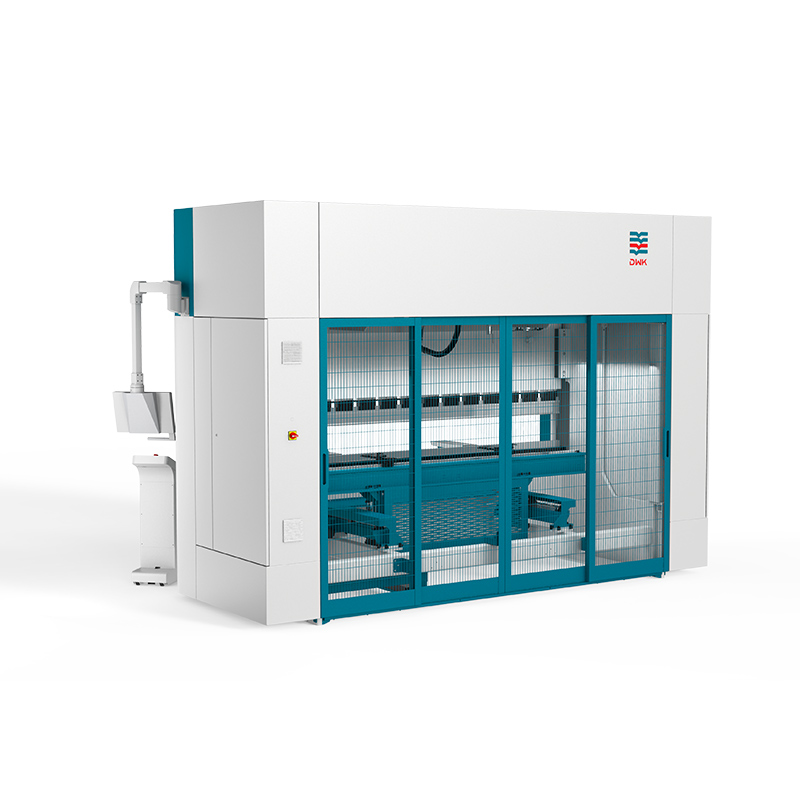
A controller is only valuable if it matches your specific daily applications. You must audit your floor requirements before buying. We break down the core evaluation criteria below.
First, assess the total number of controlled axes you need. You must account for current needs and future tooling expansions. Standard setups require Y1 and Y2 for the main hydraulic cylinders. A basic backgauge needs the X-axis. More complex forming requires R, Z1, and Z2 axes. Ensure your controller processes all these axes simultaneously without lagging. Additionally, check for active crowning support. Long beds bow under heavy tonnage. The controller must natively support dynamic hydraulic or mechanical crowning algorithms. This automatic compensation prevents severe angle inconsistencies across long bend profiles.
Speed matters in high-volume production environments. For applications utilizing a Rapid Sheet Metal Press Brake, standard computing power falls short. The controller must feature ultra-high-frequency sampling rates. It needs to monitor and manage high-speed pump outputs instantly. It must adjust proportional valve responses in real-time. If the sampling rate is too slow, the ram will overshoot target depths. This causes over-bent parts and machine stress. Ensure the processor specifically handles high-cycle dynamic hydraulics.
Modern machines do not exist in isolation. They connect to wider shop floor networks. Evaluate controller compatibility with Industry 4.0 protocols like OPC UA. Check if it communicates with your existing ERP systems. Seamless integration allows managers to track cycle times automatically. Furthermore, audit its compatibility with offline programming software like Radan or MetaCAM. Engineers should simulate bends in the office. They can then push approved jobs directly to the machine. This completely eliminates manual data entry errors on the floor.
Specific metalworking applications demand very tailored controller features. Thin sheet metal behaves differently than heavy plate steel. It requires finesse over brute force. We will use a dedicated machine profile to illustrate this decision-making process.
Consider the application focus of a Thin-Sheet S2-100-2600 Press Brake. This machine features a 100-ton capacity and a 2600mm bending length. It is specifically tailored for lighter gauges. Processing thin materials requires highly sensitive Y1/Y2 positional accuracy. Even a 0.01mm variance causes visible angle defects in thin aluminum. The chosen controller must natively support high-resolution linear encoder feedback. It must read scale data incredibly fast to stop the ram exactly on target.
Material libraries hold massive importance here. Thin sheets exhibit unpredictable spring-back tendencies. A generic bending formula rarely works. Controllers for thin-sheet applications must have accurate, built-in spring-back calculation databases. The software must reference the exact alloy type and tensile strength. This prevents operators from over-bending delicate, expensive materials. It reduces the time spent on test bends.
Finally, carefully review the tooling profile capabilities. Light gauge fabrication often involves intricate boxes and enclosures. The controller interface must support complex punch and die profile modeling. The 3D graphics must accurately reflect custom gooseneck punches. If the software lacks collision detection, crashes occur. Full visual modeling avoids costly collisions common in tightly folded thin-sheet enclosures.
Buying a brand-new machine offers a streamlined experience. Retrofitting an older frame is an entirely different challenge. Many shop owners underestimate the complexity of swapping a control system.
You must understand the harsh retrofit reality. Upgrading an existing machine is rarely plug-and-play. You cannot simply bolt a modern screen onto a 1990s frame. You must conduct a thorough mechanical and electrical audit. Check the existing proportional valves and servo drives. Assess the linear scales. Older machines use analog signals (like 0-10V). Modern controllers often output digital pulses. You may need expensive signal converters or entirely new digital drives. Ignoring this audit guarantees project failure.
Always factor in hidden implementation costs. The controller box is just the starting point. You will likely face significant electrical cabinet rewiring. Older relays often need replacing. Safety system integration is another massive hurdle. Modern codes require advanced laser light curtains. The new controller must interface seamlessly with these safety relays. Finally, calculate the cost of machine downtime. A full retrofit can pull a machine offline for weeks.
Vendor support and warranties dictate long-term success. Do not just buy a hardware box from an online retailer. Emphasize the importance of choosing a comprehensive integration vendor. They should provide expert post-installation tuning. Hydraulic PID loops require professional parameter configuration. Additionally, demand dedicated operator training on your specific floor. A great controller is worthless if your team cannot navigate its menus.
The "best" controller does not exist in a vacuum. The ideal choice is the one that directly addresses your shop's specific bottlenecks. If your pain point is setup time, prioritize 3D offline programming. If you struggle with thin-sheet accuracy, focus on high-speed encoder feedback and spring-back databases. Prioritize open networks if you run an automated, data-driven facility.
Take proactive steps before calling vendors. We recommend the following sequence:
Audit your current average first-part setup times.
Calculate your monthly scrap rates caused by poor angle consistency.
Document the specific mechanical tolerances of your existing frame.
Reach out to an integration specialist for a customized consultation.
Request a live capability demo utilizing your shop's actual CAD files.
By defining your actual production bottlenecks first, you ensure a successful transition to a modern control system.
A: No. Retrofitting older torsion-bar mechanical machines is extremely limited. Modern controllers rely on independent Y1 and Y2 axis feedback to guarantee precise parallel movement. Older torsion-bar designs mechanically link the cylinders, making advanced digital synchronization impossible. You generally can only retrofit fully synchronized hydraulic machines equipped with proportional valves and independent linear scales.
A: A 2D controller shows flat profile lines and calculates basic bend allowances. A 3D controller renders the full part, tooling, and machine frame in a three-dimensional space. 3D controllers offer vital full collision detection. They provide step-by-step visual bend sequencing, which proves crucial for guiding less experienced operators safely through complex jobs.
A: It depends on their previous experience. If an operator is transitioning from an older CNC model, basic operation typically takes a few days. The modern touchscreen interfaces are highly intuitive. However, mastering advanced PC-based offline 3D programming and custom macro creation can take several weeks of dedicated practice.
A: Typically, no. Basic on-machine touchscreen programming comes standard out of the box. However, advanced PC-based offline software (allowing office engineers to program and push jobs to the machine) is almost always sold as an additional licensing cost. Always ask your vendor to bundle these licenses during the initial purchase negotiations.


