
Please Choose Your Language
- All
- Product Name
- Product Keyword
- Product Model
- Product Summary
- Product Description
- Multi Field Search
TEL : +86-18920692288
Email : dwk0002025@163.com
Views: 0 Author: Site Editor Publish Time: 2026-08-29 Origin: Site


Fabrication machinery has shifted from purely mechanical force to data-driven precision centers. Modern fabrication shops face a severe shortage of skilled operators while managing relentless demands for high-mix, low-volume production with zero-defect tolerances. Upgrading your fabrication equipment goes far beyond simply increasing raw tonnage. You must evaluate how emerging technologies directly impact throughput, scrap rates, and overall operational resilience. A modern press brake serves as the central nervous system of the bending department. It dictates the pace of downstream operations like welding and assembly. Incorporating automation, intelligent software, advanced safety protocols, and modern drive systems changes the fundamental workflow of a shop floor. Evaluating these technologies requires a clear understanding of your production bottlenecks and material mix.
Drive System Evolution: The shift toward hybrid and all-electric drive systems offers measurable reductions in energy consumption and maintenance costs compared to legacy systems.
Software is the New Bottleneck: Offline programming and digital twin simulations are now critical for reducing setup times and maximizing machine uptime.
Automation Bridges the Skills Gap: Automated Tool Changers (ATC) and robotic bending cells provide reliable throughput despite labor shortages, though they require specific production profiles to justify the ROI.
Precision Dictates Profitability: Real-time angle correction and active crowning systems eliminate test bends, drastically reducing material waste on expensive alloys.
Safety and Ergonomics Drive Productivity: Modern optical guarding and sheet followers reduce operator fatigue and allow for faster, safer bending cycles.
Defining the success criteria for a machine upgrade requires looking past basic specifications. Modern fabrication metrics focus on cycle time reduction, setup time minimization, and first-part-good rates. A machine that bends fast but takes an hour to set up fails in a high-mix environment. You must measure how quickly an operator can transition from a heavy plate job to a thin-gauge aluminum enclosure. Success means achieving the correct angle on the very first bend, eliminating the traditional trial-and-error approach.
The cost of inaction accumulates quietly. Maintaining outdated machinery introduces hidden expenses that erode profit margins. Unplanned downtime disrupts entire production schedules. Legacy hydraulic systems require frequent fluid disposal, filter changes, and seal replacements. Older machines rely heavily on tribal knowledge. When veteran operators retire, they take their understanding of complex bend sequences and machine quirks with them. Modern equipment digitizes this knowledge, making it accessible to newer operators.
Aligning new technology with your specific production mix is the most important step. A facility processing thin-gauge stainless steel for food service equipment needs high ram speeds and rapid acceleration. A structural steel shop requires a versatile, heavy-duty machine with massive open height and deep throat depths. You must establish a framework that evaluates part volume, material variety, and complexity before selecting a machine architecture.
Audit your current setup times across different shifts.
Track the exact amount of scrap generated by test bends.
Calculate the frequency of unplanned maintenance on existing hydraulic systems.
Identify the specific part geometries that cause the most operator fatigue.
The drive system dictates how a machine applies force, consumes energy, and maintains accuracy. All-electric systems utilize servo motors and belt-and-pulley mechanisms to drive the ram. These systems excel in light-to-medium gauge work. They offer exceptional ram speed and rapid acceleration. Energy efficiency is a primary advantage, as electric machines only draw power during actual ram movement. They also eliminate hydraulic oil entirely, removing the need for fluid maintenance, leak repairs, and thermal stabilization routines.
Hybrid systems combine servo motors with localized hydraulic pumps. This servo-hydraulic approach offers the best of both worlds. You gain the high tonnage capabilities of traditional hydraulics alongside the energy efficiency of electric systems. The servo motor only spins the pump when the ram needs to move. This drastically reduces idle noise and heat generation. The hydraulic oil lasts significantly longer because it does not constantly circulate under pressure.
Advancements in traditional hydraulics remain highly relevant for heavy fabrication. A modern high precision hydraulic press brake utilizes proportional valving and advanced dual-cylinder synchronization. Linear encoders monitor the ram position on both sides of the machine. The CNC control adjusts the hydraulic flow in milliseconds. This allows traditional hydraulic systems to achieve micron-level ram repeatability, ensuring consistent bend angles even across off-center loads.
Drive System | Primary Application | Energy Efficiency | Maintenance Requirements |
|---|---|---|---|
All-Electric | Thin to medium gauge, high speed | Highest (Power on demand) | Very Low (No oil, minimal moving parts) |
Hybrid (Servo-Hydraulic) | Mixed gauge, versatile production | High (Pump runs only during movement) | Low (Extended oil life, fewer leaks) |
High Precision Hydraulic | Heavy plate, high tonnage | Standard (Continuous pump operation) | Moderate (Regular fluid and filter changes) |
Software capabilities now outweigh mechanical specifications in determining overall throughput. Offline programming decouples the setup process from actual production. Engineers can import 3D CAD models into the software and simulate the entire bend sequence. The software automatically checks for collisions between the part, the tooling, and the machine frame. It generates optimized tooling layouts and bend sequences without interrupting the machine's current operation. This keeps the spindle turning and the ram moving.
Integration with ERP and MRP systems streamlines the flow of information across the shop floor. Open-architecture controls pull job data, material specifications, and due dates directly from production software. This eliminates manual data entry at the machine control. It also ensures accurate tracking of cycle times, setup durations, and material usage. Management gains real-time visibility into machine utilization and operator efficiency.
At the machine control, 3D visualization provides visual support for operators. The screen displays a step-by-step 3D visual aid for every bend. The operator sees exactly how to orient the part against the backgauge fingers. This visual confirmation drastically reduces orientation errors, especially on asymmetrical parts. Novice operators can confidently process complex parts without relying on supervisor intervention or deciphering flat 2D prints.
High-mix environments suffer from excessive setup times. Automated Tool Changers (ATC) directly address this bottleneck. An ATC physically removes and installs punches and dies using a robotic shuttle. It can reduce a 30-minute manual tool change to a 3-minute automated sequence. This massive reduction in setup time increases available bending capacity. Facilities can process smaller batch sizes profitably, supporting just-in-time manufacturing strategies.
Transitioning to fully automated robotic bending cells requires careful evaluation of part profiles. Standalone machines rely entirely on operator pacing. Robotic cells provide continuous, predictable throughput. They require specific part characteristics to justify the integration. Parts with moderate weight, high volume, and consistent geometries are ideal candidates. The robot handles the repetitive lifting and precise positioning, freeing human operators for complex, custom jobs.
Hybrid automation introduces flexibility. Collaborative robots (cobots) can tend a machine for a long run of simple brackets. When a custom, heavy-plate job arrives, the cobot is moved aside. The operator then runs the machine manually. Modular automation ensures the machine does not become a dedicated, inflexible asset. It allows shops to scale their automation usage based on the daily production schedule.
Material variation is the enemy of precision bending. Tensile strength, grain direction, and thickness fluctuate even within the same batch of sheet metal. These variations cause the bend angle to deviate. AI-assisted angle measurement systems eliminate the need for manual test bends. Laser or optical sensors read the bend angle in real-time as the ram descends. The system feeds this data back to the control, which adjusts the ram depth on the fly to achieve the exact programmed angle.
Springback compensation is required for accurate forming. When the punch releases pressure, the material naturally springs back slightly. Advanced algorithms calculate this springback based on material type, thickness, and the specific tooling used. The control overbends the part by the exact amount required so it relaxes into the target angle. This happens during the bending cycle without operator intervention.
Modern controls feature material database learning. The machine logs material behaviors over time. It records how a specific batch of 5052 aluminum reacts to a specific V-die. The AI continuously refines its bending parameters based on historical data. This continuous improvement means the machine becomes more accurate the longer it runs, adapting to the specific alloys and thicknesses processed in your facility.
Machine telemetry transforms reactive maintenance into a proactive strategy. Modern equipment utilizes onboard sensors to monitor critical components. These sensors track hydraulic fluid health, servo motor temperatures, electrical current draw, and proportional valve performance in real-time. This continuous stream of data provides a clear picture of the machine's mechanical health.
Cloud-connected machines enable predictive diagnostics. Instead of waiting for a pump to fail and halt production, the system analyzes telemetry data to identify anomalies. It can alert maintenance teams to impending component failures weeks in advance. You can schedule a part replacement during a planned maintenance window, completely avoiding unplanned downtime and missed delivery dates.
Open API architectures allow fabrication shops to leverage this data fully. You can feed live machine data directly into custom dashboards or proprietary production software. This integration provides a holistic view of shop floor performance. Managers can track OEE accurately, identifying exactly where time is lost and which shifts perform most efficiently.
Safety systems no longer hinder productivity; they enhance it. Modern optical and laser guarding systems monitor the zone directly beneath the punch tip. Older light curtains required the ram to slow down to pressing speed inches above the material. Modern block lasers allow the ram to travel at high approach speeds much closer to the pinch point before slowing down. This safely shaves seconds off every single bending cycle.
Ergonomics directly impact part quality and operator retention. CNC sheet followers are automated supports that lift the material as it bends. When bending heavy or large-format panels, the operator normally struggles to support the overhanging weight. If the material drops, it causes reverse bending damage at the die edge. Sheet followers bear the weight, following the exact speed and angle of the bend. This prevents material damage and drastically reduces operator fatigue.
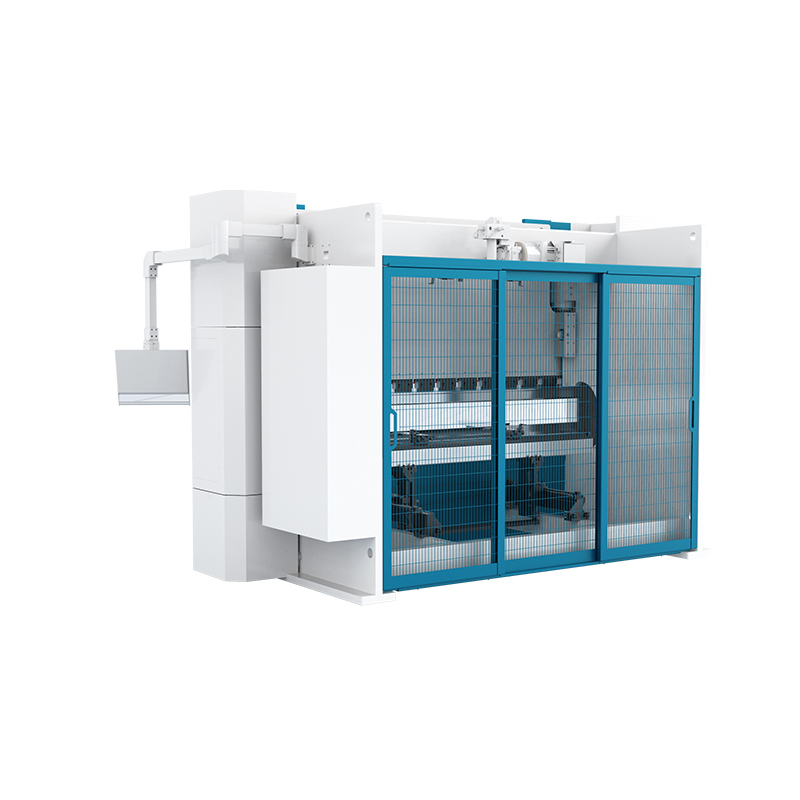
Selecting the correct tonnage requires understanding the physics of air bending. Tonnage calculations depend on material thickness, tensile strength, V-die opening, and the total bend length. A common rule of thumb dictates that bending mild steel requires a specific amount of force per linear foot, which increases exponentially as the material thickens or the V-die narrows. You must calculate the maximum tonnage required for your thickest, longest parts.
An industrial 160 ton press brake is widely considered the sweet spot for mid-sized fabrication shops. It offers exceptional versatility. A 160-ton machine with a 10-foot bed provides ample capacity to bend 1/4-inch mild steel across its full length. Simultaneously, it maintains the ram speeds and acceleration necessary to process lighter gauge materials efficiently. It bridges the gap between light-duty electric machines and massive, slow-moving heavy plate machines.
Avoiding specification errors protects your capital. Under-specifying a machine forces operators to use bottom bending techniques to achieve angles, which damages tooling and overloads the machine frame. Over-specifying wastes capital, consumes excessive floor space, and often results in slower cycle times. You must size the machine for 80% of your daily work, not the 5% outlier jobs that can be outsourced.
Tooling ecosystems dictate setup speed and precision. Wila/Trumpf style tooling features hydraulic clamping and a safety click mechanism. Tools seat automatically and perfectly align when clamped, making them ideal for high-precision and automated tool changing. European/Promecam style tooling is highly common and cost-effective. It often requires manual tightening and seating, which adds minutes to every setup. Your choice of tooling style impacts long-term setup efficiency.
Deflection management is a physical necessity. When a machine applies tonnage, the ram bows upward in the center, and the bed bows downward. This deflection means the punch penetrates less in the center of the machine than at the ends. Without compensation, a long part will have a wider angle in the middle. This is a fundamental law of physics that affects every machine, regardless of brand or build quality.
Crowning systems counteract this deflection. A CNC-controlled mechanical crowning system uses a series of precision wedges built into the lower bed. The CNC calculates the exact amount of deflection based on the programmed tonnage and material. It automatically adjusts the wedges to bow the lower bed upward, perfectly matching the deflection of the ram. This ensures consistent bend angles across the entire length of the bed, eliminating the need for paper shims.
Installing a new machine requires comprehensive spatial planning. The physical footprint of the machine is only the beginning. You must account for material staging areas, tooling storage racks, and safe operator movement zones. A high-speed machine fed by a robot requires safety fencing and interlocked gates. Workflow analysis ensures that raw materials flow smoothly to the machine and finished parts exit without creating bottlenecks.
Foundation realities cannot be ignored. High-tonnage machines exert massive forces on the floor. You must evaluate your concrete thickness and structural integrity. A standard 6-inch shop floor may crack under the concentrated load of a heavy-duty machine. Dynamic machines with rapid acceleration also introduce vibrations. Core drilling and pouring isolated, reinforced concrete pads may be necessary to ensure machine accuracy and safety over time.
Upgrading technology forces a cultural shift on the shop floor. Moving veteran operators from manual, mechanical setups to digital, CNC-driven workflows often meets resistance. Operators accustomed to manually calculating bend deductions and adjusting backgauges by hand must learn to trust the software. Management must frame the new technology as a tool that enhances their skills, not a replacement for their expertise.
Vendor support dictates the success of this transition. Evaluate a vendor's training programs rigorously. On-site training during installation is mandatory, but ongoing support is just as critical. Assess the availability of local service technicians and the vendor's remote diagnostic capabilities. When an operator encounters a programming error, a vendor who can remote into the machine control and resolve the issue in minutes prevents hours of lost production.
Audit your current scrap rates and setup times to establish a baseline for improvement.
Gather 3D CAD files of your most complex, time-consuming parts for vendor testing.
Request a live, data-backed demonstration from shortlisted manufacturers using your specific materials.
Evaluate the software interface of a modern sheet metal press brake to ensure your operators can adopt it quickly.
Verify the vendor's remote diagnostic capabilities and local technician availability before signing a purchase agreement.
A: A well-maintained CNC machine typically lasts 15 to 20 years in a production environment. The mechanical frame and hydraulic components are highly durable. The CNC control and software often become obsolete before the mechanical components fail. Regular preventative maintenance, fluid changes, and software updates significantly extend the operational lifespan and accuracy of the equipment.
A: All-electric models use servo motors and belts to move the ram, offering high speeds, lower energy consumption, and zero oil maintenance. They are ideal for lighter gauges. Hydraulic models use fluid-driven cylinders, providing massive tonnage capacity for heavy plate work. Hybrid models combine both, using servos to drive hydraulic pumps for efficiency and power.
A: ATCs use robotic shuttles to remove and install punches and dies automatically. They reduce manual setup times from 30 minutes down to 3 minutes. This allows shops to profitably run very small batch sizes, reduces operator physical strain, and ensures tooling is placed in the exact programmed location every time, eliminating setup errors.
A: Sizing depends entirely on your thickest material and longest bend length. You must calculate the required tonnage using a standard air-bending formula. Size the bed length to accommodate your longest parts, plus extra room for multiple tooling stations if you plan to perform stage bending. Always size for 80% of your standard work.
A: Yes, it can bend 1/4-inch stainless steel, but the maximum bend length depends on the specific alloy's tensile strength and the V-die opening used. Stainless steel requires significantly more tonnage per foot than mild steel. A 160-ton machine can typically bend 1/4-inch stainless over shorter lengths, but may struggle across a full 10-foot bed without a wider die.
A: CNC crowning is an automated wedge system in the lower bed that bows the bed upward during a bend. This compensates for the natural deflection of the machine frame under heavy tonnage. Without crowning, long parts will have a wider angle in the center than at the ends. It ensures consistent angles across the entire part length.


