
Please Choose Your Language
- All
- Product Name
- Product Keyword
- Product Model
- Product Summary
- Product Description
- Multi Field Search
TEL : +86-18920692288
Email : dwk0002025@163.com
Views: 0 Author: Site Editor Publish Time: 2025-09-09 Origin: Site


Hydraulic press brakes play an essential role in sheet metal fabrication, offering precise bending capabilities for various materials. However, achieving optimal bending accuracy and minimizing scrap requires a systematic approach encompassing material characteristics, tooling, machine setup, and operator technique. In this article, we’ll delve into the key strategies for enhancing bend accuracy and reducing scrap, while focusing on the use of Hydraulic Press Brakes for large parts and complex applications.
Springback is one of the most common challenges when working with a Hydraulic Press Brake. It occurs when a material, after being bent, attempts to return to its original shape. This is especially pronounced in materials with high elasticity, such as aluminum and stainless steel. To compensate for springback, proper calculation of bend allowance and overbend is crucial.
Material type and thickness significantly affect springback. For example, high-strength steels exhibit greater springback compared to mild steels. Understanding the material’s properties allows for more accurate bend allowance calculations, which is essential for ensuring the desired bend angle. A properly calculated bend allowance ensures the material is deformed just enough to achieve the desired angle without exceeding the material’s elastic limit.
Overbending is an effective way to counteract springback. By programming the press brake to bend slightly beyond the desired angle, the springback effect can be offset, resulting in more accurate final angles. Calculating overbend depends on the material’s characteristics and the tooling used, which requires a high level of precision in the programming process. Additionally, understanding the thickness and tensile strength of the material allows for better application of overbend, resulting in improved consistency in the final product.
Choosing the right tooling can significantly improve bend accuracy and repeatability. The right tooling will ensure that each part is consistently bent to specification, reducing rework and scrap.
The punch radius and V-die opening are critical parameters that affect bend quality. A larger punch radius can reduce material deformation, while selecting the correct V-die opening ensures that the material fits properly, minimizing defects. Segmented tooling can also improve bending precision by reducing variations across different bend zones, especially for complex shapes. By selecting segmented tooling for more intricate bends, the press brake can more evenly distribute the force, resulting in consistent results for every part.
Regular tool wear monitoring is essential for maintaining bending accuracy. Worn tools can cause inconsistent bends, leading to scrap. A proactive replacement policy ensures that tooling remains in optimal condition, thus preventing unnecessary errors in production. Keeping a log of tool usage and setting up a tool replacement schedule can greatly enhance repeatability. Additionally, performing routine checks to assess tool wear—whether it’s through visual inspections or more advanced methods like tool thickness measurements—helps ensure tooling is always in top condition.
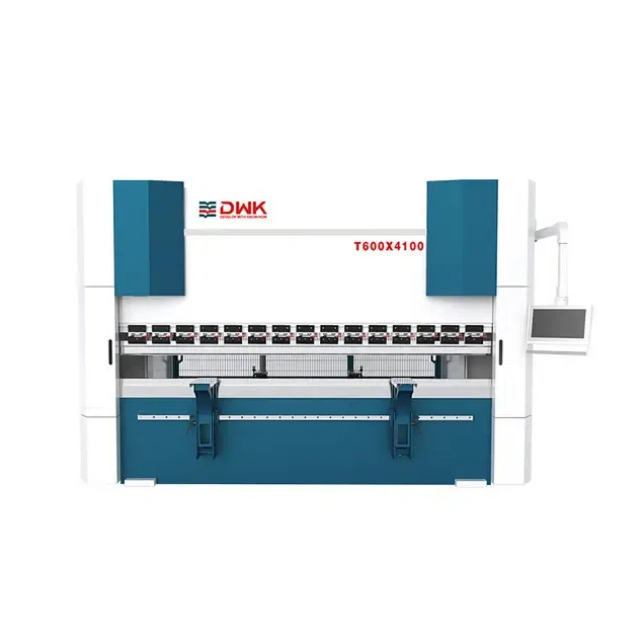
Proper machine setup is a cornerstone of bending accuracy. Calibration ensures that the press brake performs at its best, minimizing errors caused by machine drift or misalignment.
To ensure uniform bends, the machine’s crowning system must be calibrated. Crowning compensates for deflection in the bed during bending, especially for large or heavy parts. Additionally, regular checks on ram alignment and backgauge accuracy ensure that the machine operates within tight tolerances, further improving bend precision. The crowning system should be regularly calibrated to ensure it adjusts for the natural deflection that can occur during the bending of thicker or larger parts, keeping the bends even across the entire workpiece.
Integrating touch probes into the press brake system can automate the process of verifying part geometry. These probes measure key features of the part during production, and adjustments can be made on-the-fly to correct any deviations. This technology enhances the precision of the bending process, reducing human error and boosting overall part accuracy. Automated probing systems can help identify issues early in the process, allowing for immediate adjustments and reducing the likelihood of scrap due to inaccurate bends.
Operator skill is one of the most important factors in achieving high-quality bends. Consistency in clamping, feeding, and backgauge positioning can significantly reduce variability in part quality.
Consistent clamping ensures that the material stays in place during the bending process. It’s important to follow documented feed and backgauge routines, which should be standardized across all operators. These procedures ensure that the machine’s positioning and the material alignment remain constant, resulting in more predictable and accurate bends. By following established routines and guidelines, operators can significantly reduce the chances of errors caused by human oversight.
Operator training should be an ongoing process. Implementing simple training checklists can help new operators quickly get up to speed and ensure they are using the press brake optimally. First-article inspections are also crucial; checking the first part in a batch ensures that the setup is correct before mass production begins, reducing the chance of defects in the rest of the production run. Proper training reduces errors and increases the overall quality of bends, directly contributing to scrap reduction and operational efficiency.
Tracking key performance indicators (KPIs) helps monitor the effectiveness of bending processes and provides insight into areas for improvement.
Scrap rate, first-pass yield, and cycle time are all critical KPIs in any bending operation. Monitoring these metrics allows you to identify problem areas and improve efficiency. By focusing on improving first-pass yield and reducing scrap, you can optimize machine utilization and reduce waste, leading to cost savings and improved production efficiency. Understanding cycle time helps evaluate throughput and can guide decisions to improve the overall process.
A root-cause analysis helps identify the primary sources of scrap. Whether it’s due to incorrect tooling, programming errors, or material inconsistencies, pinpointing the exact cause is the first step in reducing waste. Once identified, corrective actions such as reprogramming, tool adjustment, or material sourcing can be implemented to eliminate the problem. Implementing corrective actions based on root cause analysis allows for targeted improvements, reducing scrap and enhancing overall process efficiency.
In conclusion, improving bend accuracy and cutting scrap on a Hydraulic Press Brake requires a combination of knowledge, technique, and systematized practices. By understanding springback, selecting the right tooling, ensuring proper machine calibration, and standardizing operator procedures, you can enhance the efficiency and precision of your bending operations. Monitoring key metrics like scrap rates and first-pass yield will further help in identifying areas for continuous improvement. With the right strategies in place, you can not only achieve better bend accuracy but also reduce scrap, increase throughput, and maximize profitability.
For more information on how our Hydraulic Press Brakes can optimize your bending processes and reduce waste, feel free to contact us. At DWK Machine Tool (Tianjin) Co., Ltd., we specialize in high-quality bending machines that cater to your unique manufacturing needs. Reach out today to see how we can help you achieve greater precision and efficiency in your production process.


