
Please Choose Your Language
- All
- Product Name
- Product Keyword
- Product Model
- Product Summary
- Product Description
- Multi Field Search
TEL : +86-18920692288
Email : dwk0002025@163.com
Views: 0 Author: Site Editor Publish Time: 2026-02-19 Origin: Site


You need the right tool for your shop. If you want very accurate work and tricky bends, a CNC bending machine is best. If you need lots of power and want to save money, a hydraulic press brake is a good choice. Think about these main things when picking:
Factor | CNC Bending Machines | Hydraulic Press Brakes |
|---|---|---|
Precision | Very accurate | Good for most jobs |
Output | Great for big jobs | Works well for different tasks |
Material Thickness | Best for thin or medium sheets | Handles thick materials easily |
Initial Cost | Costs more | Costs less |
This guide helps you pick the best machine for your needs.
CNC bending machines are very accurate. They can be right within ±0.001mm. This makes them good for hard and exact jobs.
Hydraulic press brakes cost less at first. They are good for bending thick pieces. This makes them a smart pick for small shops.
CNC machines work faster. They can do 30-50 bends each minute. This helps when you need to make many parts.
Both machines can bend many kinds of materials. CNC machines are better for tricky shapes. Hydraulic press brakes are better for simple jobs.
Think about what your shop needs. Look at your budget and the jobs you do. This will help you pick between a CNC bending machine and a hydraulic press brake.
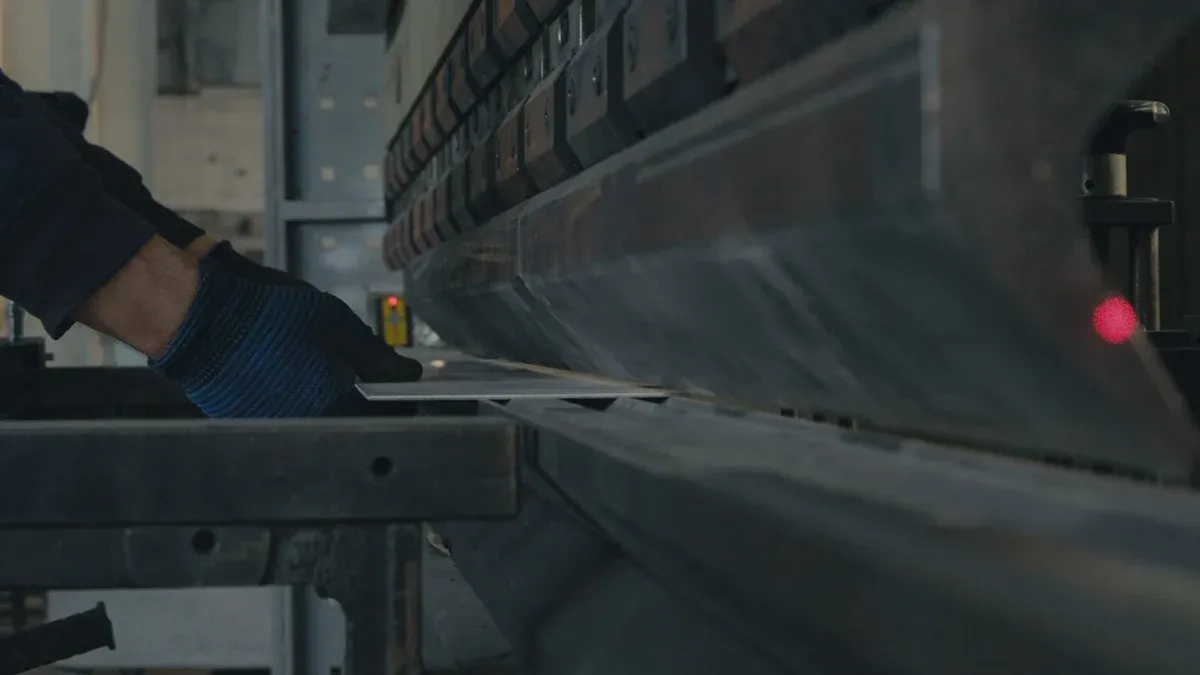
A CNC bending machine shapes metal sheets very accurately. It uses computer controls to move the parts. You put in a program, and the machine follows the steps. This means you get the same results each time. Special motors and sensors help the cnc bending machine make small, careful bends. You can watch the process and change things fast if needed.
Here are the main features that make a cnc bending machine special:
Feature | Description |
|---|---|
Multi-axis coordination | Controls many parts at once for tricky bends. |
Precision control technology | Uses smart motors and sensors for great accuracy. |
Advanced automation | Moves the backgauge by itself to save time and keep things even. |
Tool-changing mechanisms | Lets you switch tools fast between jobs. |
Safety features | Has light curtains and emergency stops to keep people safe. |
You get to use many moving parts at the same time. You can control each hydraulic cylinder by itself. The backgauge moves quickly. It also goes up and down, so you can use different die heights. These things make the cnc bending machine a top choice for shaping metal.
Cnc bending machines are used in lots of industries. They are important in making cars and airplanes. These machines help make parts like hydraulic lines and exhaust pipes. Hospitals need cnc bending machines to make tools for surgery and testing. People use them to make electronics and custom furniture too. Electronics companies use them for frames, and furniture makers use them for cool designs.
Aerospace and automotive: Needed for exact parts.
Medical equipment: Used for very careful work.
Consumer products: Good for electronics and special furniture.
A cnc bending machine helps you do hard jobs and get good results. You can work fast, be accurate, and do many kinds of metal work.
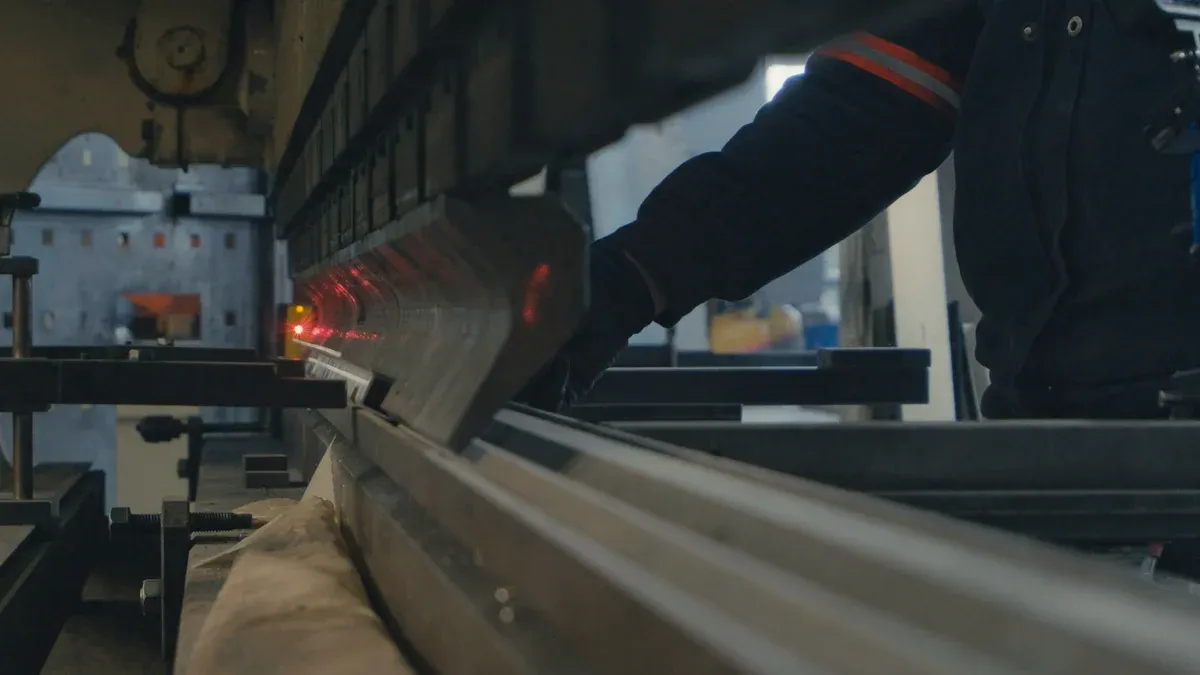
A hydraulic press brake bends metal sheets with a lot of force. It uses hydraulic power to push a ram down onto the metal. The ram presses the metal into a die to change its shape. You can pick different dies for each job. You also adjust the controls for what you need.
Here is a table that lists the main parts and steps of a hydraulic press brake:
Component/Stage | Description |
|---|---|
Hydraulic system | Makes the force to bend metal, using a pump, cylinders, and valves. |
Ram | Goes down to press the metal into the die. |
Bed and frame | Keeps everything steady and holds the metal. |
Die | Gives the metal its new shape during bending. |
Back gauge | Helps you line up the metal for good bends. |
Control system | Lets you set angles and watch the bending process. |
Setup | Means picking the right die and getting the machine ready. |
Material loading | You put the metal sheet on the bed and line it up. |
Bending cycle initiation | You start bending by turning on the hydraulic system. |
Bending process | The ram bends the metal while you watch what happens. |
Release | The ram goes up after bending, ready for the next piece. |
Unloading | You take the finished part out of the machine. |
Maintenance and cleanup | You clean and check the machine to keep it working well. |
A hydraulic press brake can bend thick metal and big parts. Its strong frame and powerful system help you get the same results every time.
Many industries use hydraulic press brakes. They help make parts for cars, planes, buildings, and more. Here is a table that shows where you might use this machine and what you can make:
Industry | Application Description |
|---|---|
Metal Fabrication | Bending sheet metal and plate for many products. |
Automotive Industry | Making body panels, chassis parts, and inside pieces for cars. |
Aerospace Industry | Shaping metal parts for planes and engines. |
Construction Industry | Making beams and supports for buildings. |
Electronics Industry | Making cases and frames for electronics. |
Furniture Manufacturing | Bending metal for frames and decorations. |
Agricultural Equipment | Making parts for tractors and farm machines. |
You can use a hydraulic press brake for easy or hard bends. It works well for making lots of parts or special projects. This machine gives you strength and flexibility for many metal jobs.
When you want the highest level of precision, a CNC bending machine stands out. You can trust this machine to deliver the same results every time. The computer controls guide every movement, so you do not have to worry about mistakes. This means you get exact bends, even if you make hundreds or thousands of parts. The precision stays the same from the first piece to the last.
Recent studies show that CNC bending machines keep their accuracy over long runs. You do not see changes in the bend, even if the machine works all day. This repeatability is important for mass production. If you need to make many parts that must fit together perfectly, you will value this level of precision. The machine uses advanced sensors and motors to check and adjust each bend. You can count on it to handle tricky jobs and tight angles.
Here is a table that shows how close each machine can get to the perfect bend:
Machine Type | Tolerance |
|---|---|
Hydraulic Press Brake | ±0.01mm |
CNC Bending Machine | ±0.001mm |
You can see that CNC bending machines offer much better precision. This helps you avoid waste and saves you time on rework.
Hydraulic press brakes also give you good precision for most jobs. You can use them for many types of metal and different thicknesses. The strong frame and powerful ram help you get solid bends. For many workshops, this level of precision is enough.
However, you may notice small changes in accuracy during long runs. Sometimes, the ram and bed can bend a little under heavy loads. This is called the "Canoe Effect." It can make the middle of the part bend more than the ends. You can use special systems to help fix this, but it is something to watch for if you need very high precision.
If you work with thick materials or do not need super tight tolerances, a hydraulic press brake gives you reliable precision. You can trust it for most bending tasks in your shop.
CNC bending machines work really fast. They use advanced digital controllers to help them. You can set up a job quickly. The machine repeats the same bend over and over. This lets you finish many parts in less time. In big factories, CNC bending machines can do 30 to 50 cycles each minute. This fast speed is great for places that make lots of parts every day.
Here is a table that shows how fast CNC bending machines are compared to hydraulic press brakes:
Machine Type | Average Cycle Time (cycles per minute) |
|---|---|
CNC Bending Machines | 30-50 |
Hydraulic Press Brakes | 10-20 |
CNC machines can also use robots or other automation tools. These tools help load and unload parts without stopping the machine. This saves time and helps avoid mistakes. You get high precision and the same results every time.
Tip: If you want to make more parts faster and keep good quality, a CNC bending machine is a smart pick.
Hydraulic press brakes are slower than CNC bending machines. You have to do many steps by hand. This means it takes longer to set up each bend. Most shops use hydraulic press brakes for about 10 to 20 cycles per minute. This speed is good for small jobs or custom work.
Hydraulic press brakes use manual or simple control systems. You might need to change settings between bends. This can slow down your work. There is not much automation, so you do not get the same speed as CNC machines.
Here is a table that compares automation features:
Feature | CNC Bending Machines | Hydraulic Press Brakes |
|---|---|---|
Control System | Advanced digital controllers | Manual or basic controls |
Automation Level | Fully automated cycles | Limited automation |
Precision and Repeatability | High | Lower |
If you do not need to work super fast, a hydraulic press brake still works well for many jobs. You can bend thick materials and do special projects easily.
You want a machine that works with many metals. Both CNC bending machines and hydraulic press brakes can do this. You can bend carbon steel, stainless steel, aluminum alloys, and titanium. These machines work for thin sheets and thick plates.
Here is a table to show the thickness range:
Type of Press Brake | Thickness Range |
|---|---|
Small Press Brake | 0.5mm - 6mm |
Medium Press Brake | 6mm - 12mm |
Large Press Brake | Above 12mm |
You can also see the types of materials and thicknesses:
Material Type | Thickness Range |
|---|---|
Thin Sheets | 0.5mm |
Thick Plates | Up to 20mm |
These machines help you do many jobs. You can bend thin aluminum for electronics. You can also bend thick steel for building things. This means your shop can handle almost any project.
Tip: If you change materials or thicknesses a lot, pick a machine with easy tool changes and settings you can adjust.
Sometimes you need to make parts with special shapes. CNC bending machines use computer programs to help with this. You can set up the machine for tricky bends in one go. This saves time and gives you the same results each time. You do not have to change the machine for every step.
Hydraulic press brakes can also do hard jobs. They have strong frames and use hydraulic systems for good bends. Many new press brakes have advanced CNC controls. You can program these machines for custom shapes and change things while working.
Here are some features that help with tricky bending:
CNC bending machines use computer programs for careful bends.
You can do many bends fast with fewer mistakes.
Hydraulic press brakes have strong frames for steady work.
You can change settings during bending for hard shapes.
You can trust both machines for custom jobs. If you need to make parts with lots of angles or tight fits, these machines give you the flexibility you need.
You want to get started quickly when you buy a new machine. CNC bending machines need more training at first. You must learn how to use the computer controls and enter programs. Many shops offer classes or online videos to help you. If you like working with computers, you will enjoy learning this machine.
Hydraulic press brakes are easier to learn. You use simple buttons and levers. You can start bending metal after a short lesson. Many operators learn by watching others and practicing. If you want to train new workers fast, a hydraulic press brake is a good choice.
Here is a quick look at the training time for each machine:
Machine Type | Training Time Needed |
|---|---|
CNC Bending Machine | 1-2 weeks |
Hydraulic Press Brake | 1-3 days |
Tip: If you want to make complex parts, spend more time learning the CNC machine. For simple jobs, the hydraulic press brake is faster to pick up.
The user interface is what you see and touch on the machine. CNC bending machines use screens with menus and buttons. You can save programs and change settings with a few taps. Some machines even show you pictures of the bends. This helps you avoid mistakes.
Hydraulic press brakes use simple controls. You turn knobs or push buttons to set the angle and force. Modern press brakes, like those from DWK Machine Tool, have easy-to-read displays and ergonomic controls. You will not get tired using them all day.
CNC machines give you more options and help with tricky jobs.
Hydraulic press brakes keep things simple and clear.
Note: If you want a machine that is easy to use and does not tire you out, look for one with an ergonomic design and a clear display.
When you choose a machine for your shop, you need to think about the price. CNC bending machines usually cost more at the start. You pay for advanced computer controls and high-tech parts. These machines give you fast speeds and very tight bends. If you want to make many parts quickly, this can save you money over time.
Hydraulic press brakes cost less when you buy them. You get strong power and can bend thick metal. Many small shops pick hydraulic press brakes because they fit smaller budgets. You can start working with less money up front.
Tip: If you plan to grow your business or take on big jobs, a CNC bending machine may be a smart investment. If you want to keep costs low, a hydraulic press brake is a good choice.
You also need to think about how much it costs to keep your machine running. CNC bending machines have a modular design. This means you can fix parts quickly. They have self-diagnostic tools that help you find problems fast. You can sign up for preventive maintenance contracts. These contracts help you avoid surprise breakdowns and keep your machine working.
Hydraulic press brakes have simple parts. They are easy to fix, but they may need more repairs if you use them a lot. Some older machines can break down more often. You may spend more time fixing them.
Here is a table to help you compare:
Machine Type | Maintenance Cost Characteristics | Efficiency Characteristics |
|---|---|---|
NC Bending Machine | Complex mechanical synchronization leads to scattered failure points, resulting in high downtime. | Troubleshooting is difficult, leading to extended downtimes and costly repairs. |
CNC Bending Machine | Modular design with self-diagnostic capabilities reduces Mean Time to Repair (MTTR). | Preventive maintenance contracts are cost-effective, minimizing unexpected shutdowns. |
CNC bending machines work faster and give you more accurate bends. They run at 30-50 cycles per minute. Hydraulic press brakes run at 10-20 cycles per minute. You can finish more jobs with a CNC machine, which can help you earn more money.
Note: Always check the total cost, not just the price tag. A machine that costs more at first may save you money in the long run.
You want your machine to work well every day. Doing regular maintenance helps stop problems before they start. This keeps your shop running without trouble. It is better to fix small things early than wait for a big problem. You save money by keeping your machine working right. This way, you do not have to throw away bad parts.
Here are some common service needs for both CNC bending machines and hydraulic press brakes:
Check the hydraulic system often. Look for leaks or low oil.
Clean the machine so dust and dirt do not build up.
Make sure the CNC control works right. Test the buttons and screens.
Run a warm-up cycle before you start. Let the machine idle for 10–15 minutes until the hydraulic oil gets to 35–40°C.
Wipe the upper punch tip and lower die V-groove with a nonwoven cloth. Clean dies help you make better bends.
Tip: If you keep your machine clean and check it often, you will have less downtime and your work will stay on schedule.
You need a machine that lasts a long time. Both CNC bending machines and hydraulic press brakes have strong frames and tough parts. These machines can handle heavy work and keep going for years. Newer press brakes, like those from DWK Machine Tool, use strong designs to protect your money.
Here is a table that shows how durability compares:
Machine Type | Durability Features | Expected Lifespan |
|---|---|---|
CNC Bending Machine | Precision parts, strong frame | 10–15 years |
Hydraulic Press Brake | Heavy-duty build, reinforced frame | 15–20 years |
You can trust these machines to work well in busy shops. If you follow the maintenance steps, your machine will stay safe and reliable. A strong machine means less downtime and more money for your business.
You want to stay safe when you use powerful machines. Modern CNC bending machines and hydraulic press brakes come with many built-in safety features. These features help you avoid accidents and keep your work area secure. You can see some of the most common protections in the table below:
Safety Feature | Description |
|---|---|
Laser Guards | Protect you from accidental contact with moving parts. |
Emergency Stops | Let you shut down the machine right away if something goes wrong. |
Dual-Hand Operation | Make you use both hands to start the machine, keeping you safe. |
Laser guards use light beams to watch the danger zone. If your hand or any object gets too close, the machine stops right away. Emergency stop buttons are easy to reach. You can press them if you see a problem. Dual-hand operation means you must use both hands to start the bend. This keeps your hands away from the moving parts.
Tip: Always check that these safety features work before you start your job.
You spend a lot of time at your machine. Good ergonomics help you work longer without feeling tired or getting hurt. CNC bending machines and hydraulic press brakes focus on making your job easier and safer.
CNC bending machines use smart controls. These controls let you do more with less effort. You do not need to touch the metal as much. The machine moves parts for you and checks the force in real time. This reduces your risk of injury.
Hydraulic press brakes also help you stay safe. Many models have laser safety systems and emergency stop buttons. These features stop the machine if something enters the danger zone.
Here are some ways these machines protect you:
Multi-axis control reduces how much you need to move parts by hand.
Real-time monitoring helps you avoid mistakes.
Ergonomic controls and displays make it easy to use the machine all day.
You can trust these machines to keep you safe and comfortable while you work.
You want a machine that fits your space and budget. Many small shops choose a hydraulic press. This machine costs less at the start. You can use it for many jobs without spending a lot of money. You do not need much training to start using a hydraulic press. You can switch between jobs quickly. This helps when you work on custom parts or small batches.
A hydraulic press gives you these benefits:
Lower initial investment, so you save money.
Simple operation, which means you can train new workers fast.
Easy maintenance, so you spend less time fixing problems.
Good for custom work and frequent changes.
If you want more automation and less manual work, you can look at a cnc press brake. This machine gives you consistent bends and reduces mistakes. You do not need to adjust the machine by hand. You can bend many shapes with one setup. You also waste less material, which saves you money.
Here is a table to help you compare the main advantages for small shops:
Advantage | Description |
|---|---|
Consistent bending radius | Ensures uniformity in production |
No need for manual adjustments | Reduces labor and potential for errors |
Multi-radius bending | Increases versatility in fabrication |
Reduction in material wastage | Enhances cost-effectiveness and efficiency |
You can choose a hydraulic press for simple jobs and lower costs. You can choose a cnc press brake if you want more precision and less waste.
You need speed and accuracy when you make many parts every day. A cnc press brake helps you finish jobs faster. You can set up the machine once and make hundreds of parts with the same quality. The computer controls keep every bend the same. You do not need many workers to run the machine. This saves you money on labor.
A hydraulic press can also work in big shops. It bends thick metal and handles tough jobs. You may need more time to set up each job. The speed is slower than a cnc press brake. You may need more workers to keep up with large orders.
Here is a table that shows how each machine works in large production:
Feature | Hydraulic Press Brakes | CNC Press Brakes |
|---|---|---|
Speed | Slower | Faster |
Setup Time | Longer | Significantly Reduced |
Ideal for | Smaller Batches | High-Volume Production |
Efficiency | Moderate | High |
You get these benefits with a cnc press brake in large production:
Less material waste, so you save money.
Faster production, which means you finish jobs quickly.
Consistent quality, so every part matches.
Fewer workers needed, which lowers your costs.
High return on investment, so your business grows.
A hydraulic press works well for big jobs that need strong force. You can use it for thick materials and special shapes. You may need to spend more time on setup and changeovers.
You want the right machine for your work. Each machine has strengths for different jobs.
For custom or specialized bending, a hydraulic press is a smart choice. You can use different punches and dies to make sharp bends and special angles. This machine helps you create detailed parts for many industries.
For high-volume production, a cnc press brake gives you speed and repeatability. You can make many parts with the same shape and size. The machine uses advanced controls to keep every bend perfect.
For small batches and frequent changes, a hydraulic press gives you flexibility. You can switch between jobs without long setup times. You can handle custom orders and small runs with ease.
The market for bending machines keeps growing. Many industries need machines that make precise parts. You can see more shops using both types of machines to meet different needs.
DWK Machine Tool's Press Brake stands out as a modern hydraulic press. You get a CNC control system for accurate bends. The heavy-duty design lets you handle tough jobs every day. You can choose the press force you need, up to 225 tons. The machine lasts a long time with proper care. You can pick different models for thin or thick materials. The ergonomic controls make your work easier and safer. You can trust this hydraulic press for both small shops and large factories.
Tip: Think about your shop size, the types of jobs you do, and your budget. You can talk to DWK Machine Tool for help picking the best hydraulic press for your needs.
You should pick a machine that fits your job. The table below shows how CNC bending machines and hydraulic press brakes are different:
Feature | CNC Bending Machines | Hydraulic Press Brakes |
|---|---|---|
Precision | ±0.001mm | ±0.01mm |
Speed | 30-50 bends/min | 10-20 bends/min |
Flexibility | Programmed angles | Manual adjustments |
Initial Cost | Higher | Lower |
Use CNC bending machines if you need to make lots of parts very accurately.
Choose hydraulic press brakes if you want to do special jobs or spend less money.
Think about what your shop needs and ask DWK Machine Tool for help.
A CNC bending machine uses computer controls for precise bends. A hydraulic press brake uses hydraulic power for strong bends. You get more accuracy with CNC. You get more force with hydraulic.
Yes, you can use both machines for thick metal. Hydraulic press brakes handle thick sheets easily. CNC bending machines also work with thick metal if you choose the right model.
You need more training for a CNC bending machine. You learn to use computer programs and controls. You can learn to use a hydraulic press brake faster because it has simple buttons and levers.
Both machines have safety features like emergency stops and laser guards. CNC bending machines often have more automatic protections. Always follow safety rules and check the machine before you start.
Think about your jobs, budget, and space. If you want high precision and speed, choose a CNC bending machine. If you want lower cost and strong power, pick a hydraulic press brake.


