
Please Choose Your Language
- All
- Product Name
- Product Keyword
- Product Model
- Product Summary
- Product Description
- Multi Field Search
TEL : +86-18920692288
Email : dwk0002025@163.com



| Quantity: | |
|---|---|


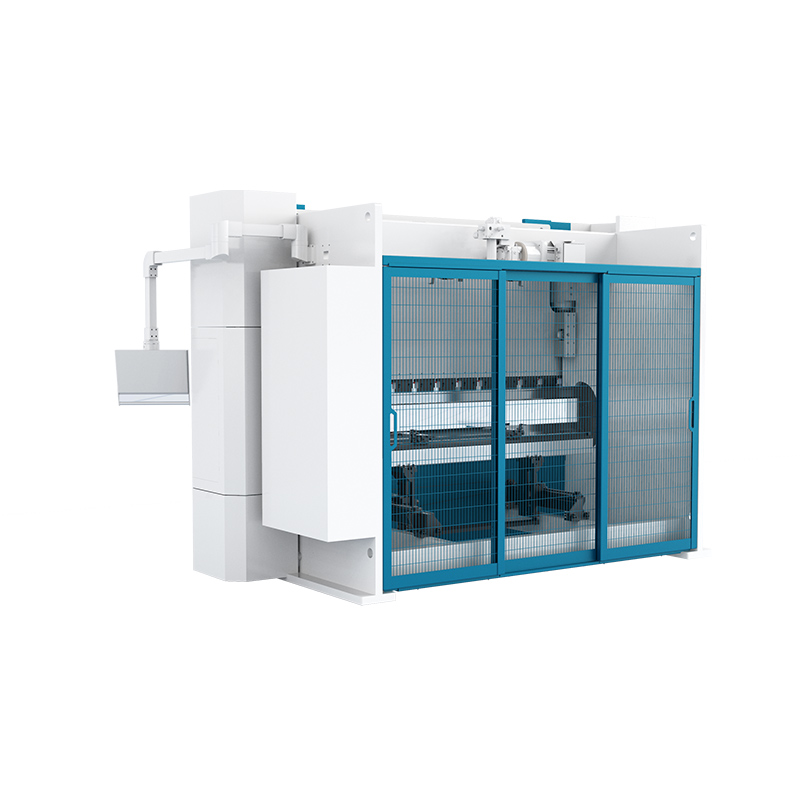
The T320-3100 Press Brake engineered by DWK Machine Tool (Tianjin) Co., Ltd. represents a formidable solution for heavy industrial metal forming. When processing thick, large-format steel plates, manufacturers require consistent force and absolute structural rigidity to prevent material warping. Delivering a massive 320-ton press force across an extended 3100mm bending length, this equipment effortlessly manages dense materials, transforming metal sheets into precise angles without material fatigue. The machine operates with a steady, commanding presence on the factory floor, characterized by the smooth, controlled descent of its hydraulic rams and the quiet efficiency of its motor. By integrating an intelligent CNC control technology with a highly visual interface, operators can simulate complex bending sequences before executing them, ensuring that every angle falls perfectly within the 0°-120° range. This eliminates the costly trial-and-error often associated with heavy metal fabrication, providing a dependable foundation for continuous, high-intensity production cycles and long-term operational stability.


Press Force | 320 Tons |
Bending Length | 3100 mm |
Back Gauge Stroke | 1000 mm |
Main Motor Power | 15 kW |
Bending Angle | 0° - 120° |
Stroke Adjustment | Manual/Automatic |
Max Bending Capacity | 12 mm (Mild Steel) |
Control System | CNC with graphical interface |
Equipped with a highly intuitive graphical interface CNC system, operators can visualize the entire bending process in real-time before the physical tooling touches the metal. Benefit: This eliminates manual calculation errors, ensuring repeatable bending precision (±0.1° tolerance) for complex, multi-step components, drastically reducing material waste on expensive thick plates.
The machine’s immense press force and expansive bending length provide the exact mechanical torque required to process thick materials (up to 12mm mild steel) across long spans. Benefit: It effortlessly handles heavy-duty tasks like forming automotive chassis brackets and construction steel beams in a single pass, eliminating the need for multiple machine setups or secondary processing.
Driven by a 15 kW main motor, the optimized hydraulic system maintains stable fluid dynamics and minimizes power consumption without compromising downward force. Benefit: This thermal-managed fluid design lowers operational electricity costs by 15-20% compared to traditional press brakes, while preventing hydraulic oil overheating during extended 10-hour production shifts.
Dual-mode stroke adjustment caters directly to the fluctuating demands of modern factory floors. Benefit: It accelerates setup time for custom, small-batch orders using manual mode, while ensuring absolute cycle consistency and rapid repetition for mass production runs via the automatic setting.
To counteract the natural bowing of the machine bed under 320 tons of pressure, this model incorporates an advanced mechanical or hydraulic crowning technology. Benefit: It dynamically adjusts the lower beam during the bending cycle, guaranteeing that the angle and straightness remain perfectly uniform across the entire 3100mm length, avoiding the "canoe effect" on long workpieces.
The upper beam is fitted with precision quick-release clamping devices, compatible with a wide array of standard and custom dies. Benefit: Operators experience a firm, secure grip on heavy tooling while reducing die-changeover times by a significant margin, accelerating the transition between different product runs on busy manufacturing lines.
Operator protection is prioritized through the integration of CE-compliant laser guarding (such as DSP or Fiessler systems) and responsive safety light curtains. Benefit: These invisible optical barriers instantly halt the hydraulic ram if an obstruction is detected near the tooling zone, providing the highest level of workplace safety without hindering production speed.
The internal control architecture features dedicated communication interfaces pre-configured for robotic arm integration. Benefit: As your facility scales, this press brake can be easily upgraded into a fully automated bending cell or synchronized in a Tandem configuration with a second machine, future-proofing your capital investment.
The T320-3100 Press Brake is specifically engineered to resolve the heavy-duty forming challenges faced by demanding industrial sectors:
Automotive & Commercial Vehicle Manufacturing: Delivers the extreme torque necessary to bend thick steel into rigid car body frames, heavy suspension brackets, and load-bearing truck structural components where structural integrity is critical for vehicle safety.
Aerospace Industry: Processes specialized aluminum and titanium alloy panels for aircraft engine mounts and curved fuselage sections. The precise CNC control ensures exact angular tolerances are met without inducing micro-cracks in sensitive aviation materials.
Heavy Construction Machinery: Fabricates thick, wear-resistant metal plates used in the assembly of excavator buckets, heavy lifting crane arms, and concrete mixer drums—components that must endure extreme daily physical abuse in the field.
Large-Scale Sheet Metal Fabrication: Produces massive protective enclosures for industrial power generators, electrical transformers, and standardized shipping containers, relying on the 3100mm length to fold long panels in a single, uninterrupted motion.
DWK implements a rigorous, multi-stage quality assurance protocol for every T320-3100 unit, ensuring compliance with global industrial standards:
International Authority Certifications: The entire machine architecture strictly adheres to CE and ISO 9001 quality and safety management systems, facilitating smooth import customs clearance and ensuring immediate compliance for deployment in factories worldwide.
Pre-Assembly Component Testing: Before a single bolt is tightened, technicians conduct micrometer inspections on all critical parts—including the CNC modules, hydraulic pumps, and steel frame geometry—to verify absolute dimensional accuracy.
Dynamic Performance Testing: Each fully assembled machine undergoes 24-hour continuous bending trials under maximum load. Engineers monitor hydraulic valve consistency, fluid temperatures, and measure micro-vibrations to verify pressure stability and angle accuracy.
Comprehensive Final Inspection: A dedicated audit team performs a final checklist covering dimensional precision, the exact functionality of the safety fences and laser guards, and the reliability of the electrical grounding system prior to packaging.
Transporting a 320-ton capacity industrial machine requires specialized logistics. We utilize industrial-grade vacuum rust-proof packaging to protect the machined surfaces and sensitive electronics from salty ocean air. The equipment is then secured using professional Flat Rack container lashing and reinforcement techniques, guaranteeing that the heavy structure remains completely immobilized and safe during long-distance international transit.
To minimize long-term equipment downtime, we provide a global support infrastructure. This includes on-site installation and calibration, a standard warranty period, and a rapid-response network for lifetime spare parts supply, ensuring your production line remains active year after year.
Yes. It supports a wide range of materials, including aluminum, copper, and stainless steel. The CNC system allows operators to fine-tune the hydraulic pressure parameters and descent speeds to match each specific material’s ductility, preventing surface marring or tearing on softer metals.
It features a deep 1000mm back gauge stroke. This extensive range enables highly flexible and accurate positioning for exceptionally large, deep, or irregularly shaped workpieces, allowing for complex multi-bend profiles without material interference.
Absolutely. DWK offers comprehensive on-site training sessions to help your floor operators master the CNC graphical interface. This instruction covers programming complex bending sequences, performing routine mechanical maintenance, and troubleshooting common operational alerts to maximize machine uptime.


