
Please Choose Your Language
- All
- Product Name
- Product Keyword
- Product Model
- Product Summary
- Product Description
- Multi Field Search
TEL : +86-18920692288
Email : dwk0002025@163.com
Views: 0 Author: Site Editor Publish Time: 2026-03-17 Origin: Site


In the world of sheet metal fabrication, CNC Bending Machines have revolutionized the way manufacturers approach precision bending. These machines provide unparalleled accuracy, speed, and flexibility, making them an essential tool in industries ranging from aerospace to automotive. For beginners, understanding how to program these machines is the first step toward achieving high-quality results.
Programming a CNC Bending Machine is not as difficult as it may seem, but it does require a strong understanding of both the machine's functions and the materials being used. In this article, we will cover key programming tips to help beginners get started with CNC Bending Machines, improve efficiency, and achieve precise bends every time.
CNC programming refers to the process of creating instructions for CNC machines using specific codes and software. For CNC Bending Machines, this involves writing programs that instruct the machine how to bend sheet metal according to specified parameters, such as angle, radius, and material thickness.
The key advantage of CNC programming is the high level of precision and repeatability it offers. Unlike manual bending, CNC bending programs can consistently produce high-quality results, which is essential for modern manufacturing processes.
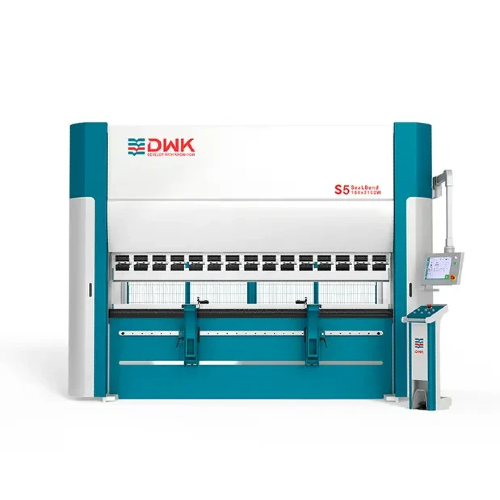
Before diving into programming, it’s essential to understand the core components of a CNC Bending Machine:
Control Panel: This is the interface where programs are loaded, and adjustments are made to bending parameters.
Tooling: Includes the upper and lower dies that create the bends in the sheet metal.
Machine Tools: These include the punch, the press brake, and the back gauge, which are critical for accurately positioning the material and bending it.
Understanding how these components work together will help beginners write more effective programs and troubleshoot any issues that may arise during operation.
There are various programming languages used in CNC machining, and the language used in CNC Bending Machines can vary depending on the machine’s make and model. The most commonly used languages include:
G-Code: The most universal CNC language, often used for general machine operations.
Proprietary CNC Languages: Many CNC Bending Machines use proprietary programming languages specific to their manufacturers, such as Amada, Trumpf, or Bystronic.
In this article, we’ll focus on the general principles that apply to all CNC bending programs, regardless of the language.
Before you can write an effective CNC bending program, you need to understand the materials you are working with. Different materials, such as steel, aluminum, or stainless steel, require different bending parameters. Additionally, the thickness of the material can impact the amount of force needed for bending.
To ensure that your CNC program is accurate, you’ll need to choose the appropriate tools for the material. Bending dies, punch tools, and press brake settings must be selected to match the material type and thickness. The tooling setup is a critical step for ensuring that the machine operates efficiently and produces accurate bends.
Calculating the correct bend angle and radius is one of the most important aspects of CNC programming. Incorrectly programmed bends can result in scrap material, poor fit, or even machine damage. Here are the key factors to consider:
Bend Angle: The angle at which the metal is bent. Accurate bend angles are crucial for product quality and performance.
Bend Radius: The inner radius of the bend, which depends on the material thickness and type. A smaller radius is more difficult to achieve, and using the wrong radius can lead to cracks or defects in the material.
Before writing your program, you must calibrate the machine. This involves setting the correct position of the tools, checking the alignment, and verifying that the machine’s coordinate system is correctly configured.
Ensure that the CNC Bending Machine is properly set up with the right tooling for the material, as well as an accurate back gauge position. Calibration is essential for minimizing errors in the bending process and ensuring consistent, high-quality results.
A CNC bending program consists of several sections, each providing the machine with specific instructions. Understanding the basic structure of the program is key for beginners.
Here’s a breakdown of the typical structure:
Start Command: In many CNC systems, the program begins with a start command that initializes the machine and sets up initial parameters, like material type and thickness.
Tool Movements: This section contains instructions for the movement of the machine’s tools. For CNC bending, this includes the punch movement and die positioning.
Bend Commands: These are the critical instructions for creating bends, specifying angles, radii, and any compensations required based on the material.
End Command: Marks the end of the program, where the machine resets, and prepares for the next task.
Each CNC system has specific codes or commands that correspond to various actions, but many of the commands for CNC bending are similar across different systems. Some common commands include:
Command | Description |
G01 (Linear Move) | Defines linear movement of the machine tool |
G05 (Bend Command) | Defines a bending operation in the program |
G90 (Absolute Positioning) | Specifies that all positions are in absolute coordinates |
G92 (Tool Setup) | Used for tool offsets and adjustments |
These commands are programmed into the control panel, and the CNC machine reads them to execute specific operations, such as moving the tooling or making the bend.
To start programming, beginners can begin with a simple bending operation, such as creating a 90-degree bend in a piece of sheet metal. Here’s a simple example of a CNC bending program:
Setup Parameters:
Material: Steel
Thickness: 2mm
Bend Angle: 90 degrees
Program Commands:
G90 (Absolute Positioning)
G05 (Bend Command)
G01 (Move tool to bending position)
This basic program will guide the CNC Bending Machine through a simple operation, ensuring that the part is bent to the correct angle.
In real-world manufacturing, material thickness, hardness, and other properties can vary from one batch to another. These variations can affect the accuracy of your bends. Advanced CNC bending programs allow for compensations to be made during the programming process.
By using the machine’s feedback system, you can adjust the bending parameters to account for variations in material properties, ensuring consistent results even when material quality changes.
While simple CNC bending operations typically involve just one axis, more complex designs may require multi-axis programming. This technique allows for bends to be made on multiple sides of the sheet metal, and the machine can bend along more than one axis.
This programming technique is crucial for creating parts with complex geometries, such as those found in the aerospace and automotive industries.
To increase production speed, automation can be used to program a series of bends into one sequence. By automating the process, you can ensure that the machine performs multiple bends without the need for manual intervention, improving both efficiency and accuracy.
Before full-scale production, always run test bends to ensure that the program is correct. Testing allows you to check the accuracy of the bends and confirm that the material is being processed correctly. Running these tests will help you identify potential issues before they cause significant production delays.
After running your test bends, you may need to fine-tune your program. Adjusting parameters such as bend radius, angle, or tool position can help improve the final product. This process of optimization ensures that your CNC bending program delivers precise, high-quality results.
Even though CNC Bending Machines are highly automated, it is important to monitor the machine during production to ensure that it is functioning correctly. Keep an eye on the control panel for any alerts or issues that may arise, and be ready to intervene if needed.
Safety is a critical aspect of CNC machine operation. Operators should always follow standard safety protocols to ensure they are working in a safe environment. This includes wearing protective gear, ensuring proper training, and keeping a clean workspace.
In case of an emergency or malfunction, it is essential to know how to safely shut down the CNC Bending Machine. This involves following the emergency stop procedures and ensuring that the machine is powered down correctly to avoid damage.
Programming a CNC Bending Machine may seem daunting at first, but with a solid grasp of the fundamentals, any beginner can quickly master it. By following the practical tips and techniques in this article, you can ensure that your CNC bending programs are precise, efficient, and capable of delivering high-quality results.
As you progress and gain more experience in CNC programming, you will be able to explore advanced methods like multi-axis programming and automated bending sequences. These techniques will enhance your production efficiency and allow you to tackle a broader range of bending tasks with confidence.
At Peugeot Machine Tool (Tianjin) Co., Ltd., we specialize in providing top-tier CNC Bending Machines designed to meet your precise manufacturing needs. Whether you're just starting out or looking to optimize your production, our team is here to help you achieve the best results. We invite you to get in touch with us to learn more about how our machines and expertise can transform your bending operations, ensuring that you stay ahead in the industry. Let us support you in reaching new heights of precision and efficiency in your CNC bending processes.
What are the most important factors to consider when programming a CNC Bending Machine?
Material type, thickness, bend radius, and tooling selection are key factors that affect the accuracy and efficiency of your CNC program.
How do I know if my CNC bending program is accurate?
Running test bends is essential to verify that your program is correct. If the test bends meet the specifications, the program can be used for full-scale production.
Can I program multiple bends in a single CNC Bending Machine cycle?
Yes, CNC Bending Machines can be programmed to perform multiple bends in a single cycle, reducing setup times and improving efficiency.
Do I need to learn specific programming languages for CNC Bending Machines?
While G-code is commonly used, many machines have proprietary programming languages. Familiarizing yourself with the specific language of your machine is important for effective programming.
What should I do if my CNC Bending Machine is producing inaccurate bends?
Double-check your program settings, tooling, and machine calibration. Run test bends and adjust the program as needed to improve accuracy.
How can I improve the speed of CNC Bending without sacrificing quality?
Automating bending sequences, fine-tuning your program, and optimizing tool movements can help increase production speed while maintaining high quality.


