
Please Choose Your Language
- All
- Product Name
- Product Keyword
- Product Model
- Product Summary
- Product Description
- Multi Field Search
TEL : +86-18920692288
Email : dwk0002025@163.com
Views: 0 Author: Site Editor Publish Time: 2026-02-26 Origin: Site


Selecting the right machinery for your fabrication shop is rarely a simple calculation of initial cost versus budget. It often represents a strategic decision between embracing modern versatility and relying on traditional, high-speed mechanics. For decades, the mechanical friction-clutch press brake was the undisputed workhorse of the metal forming industry, known for its rapid cycling and durability. However, the manufacturing landscape has shifted dramatically toward high-mix, low-volume production, driving the market toward hydraulic and electric systems designed for precision fabrication.
The choice between a hydraulic and a mechanical press brake impacts more than just your capital expenditure; it dictates the types of jobs your shop can accept, the safety of your operators, and your long-term operational efficiency. This article defines the critical comparison criteria you need to consider, including force generation mechanics, safety compliance standards, operational flexibility, and Total Cost of Ownership (TCO). By understanding these nuances, you can ensure your investment aligns with your production goals rather than limiting them.
Force Profile: Hydraulic press brakes deliver full tonnage at any point in the stroke; mechanical brakes only deliver max tonnage at the bottom dead center.
Safety: Hydraulic systems offer superior operator safety (instant stop/reverse), whereas mechanical flywheels carry significant inertia risks.
Application: Choose mechanical for high-speed, simple coining/punching; choose hydraulic for precision bending, complex geometries, and heavy plate fabrication.
Maintenance: Mechanical requires less fluid maintenance but complex mechanical adjustments; hydraulic requires regular oil/seal management but offers easier setup.
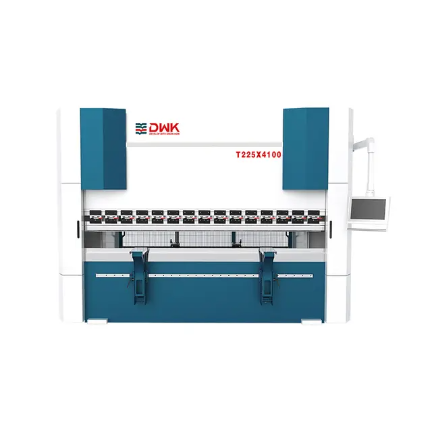
To understand the practical differences between these machines, we must first look at the physics driving the ram. The fundamental distinction lies in how energy is stored and delivered to the workpiece.
Mechanical press brakes operate using a flywheel-crankshaft design. An electric motor spins a massive flywheel, building up kinetic energy. When the operator engages the clutch, this energy transfers to a crankshaft that drives the ram down in a fixed cycle.
The critical limitation here is that force is generated by that stored kinetic energy. Consequently, the machine’s full rated tonnage is only available at the very bottom of the stroke, known as Bottom Dead Center (BDC). As the ram descends, the available force is significantly lower. This physics constraint makes mechanical brakes poor candidates for deep box bending or thick plate work, where sustained pressure is required throughout a long stroke.
In contrast, hydraulic systems utilize synchronized cylinders and pistons driven by oil pressure, adhering to Pascal’s Law. This design allows for a fundamental advantage in metal forming: hydraulic sheet metal bending machines provide their full rated tonnage at any point in the descent.
Whether the ram is at the top of the stroke or millimeters from the bottom, the force remains constant. This capability is essential for "air bending," where the material is pressed into the die opening without bottoming out, and for handling variable material thicknesses without the risk of stalling the machine.
The difference in mechanics also dictates the stroke control. Mechanical systems feature a "fixed stroke" length determined by the crankshaft geometry. Changing the stroke requires complex mechanical adjustments. Hydraulic systems offer a variable and programmable stroke length. Operators can program the ram to retract only as far as necessary to clear the part, significantly optimizing cycle times for different bending depths.
When evaluating performance, buyers often confuse raw cycle speed with overall throughput. While one machine may move faster, the other may produce finished parts more quickly due to setup efficiencies.
It is true that mechanical brakes are generally faster in terms of pure cycle time. The flywheel drive allows for rapid descent and return, making them ideal for punching applications or simple coining where the ram moves continuously. However, this speed advantage is often negated by the "Setup Penalty."
Adjusting the ram on a mechanical brake to accommodate different tooling or material thicknesses is a manual, labor-intensive process. Conversely, hydraulic systems—especially those equipped with CNC controls—significantly reduce setup time between jobs. The ability to recall programs and automatically adjust backgauges and stroke depth means a hydraulic machine can switch from bending a heavy bracket to a thin panel in minutes, whereas a mechanical machine might be down for an hour.
Precision is where modern fabrication standards demand hydraulic technology. Mechanical systems rely on rigid mechanical alignment. Over time, the gibs and ways wear down, causing the ram to drift and degrading accuracy.
Hydraulic systems combat this with advanced technology. They allow for independent control of the cylinders (Y1 and Y2 axes), enabling the machine to tilt the ram slightly to correct for machine deflection or off-center bending. This level of granular control ensures that bend angles remain consistent across the entire length of the part, reducing scrap rates significantly.
A unique advantage of hydraulic press brakes is the ability to "inch" the ram. Setup operators can move the ram down in tiny, controlled increments to verify tooling alignment and bend depth before committing to a bend. Mechanical brakes generally do not offer this luxury; once the clutch engages, the flywheel momentum drives the ram through a full cycle. This "all-or-nothing" movement makes proving out new setups on mechanical brakes more stressful and prone to tooling damage.
Safety regulations have evolved drastically since the heyday of mechanical press brakes. Today, operator safety is a primary liability concern for shop owners, and the choice of machine plays a major role in compliance.
The inherent danger of a mechanical press brake lies in the flywheel. Because the machine relies on stored momentum, it cannot stop instantly. Even if a safety device cuts the power, the inertia of the spinning flywheel can cause the ram to continue its descent for dangerous milliseconds or even complete a full stroke. This "drift" complicates the integration of modern light curtains or laser guarding systems, which rely on the ability to halt the machine the moment a beam is broken.
Hydraulic systems are inherently safer because they operate on direct pressure rather than momentum. When an operator releases the foot pedal or breaches a safety sensor, the hydraulic valves close immediately. The ram stops and can instantly reverse direction.
This capability allows for close-proximity guarding, enabling operators to hold small parts safely. Furthermore, meeting strict safety regulations (such as OSHA or ANSI standards in the US, or CE in Europe) is standard for modern hydraulic machines but can be prohibitively expensive or technically impossible to retrofit onto older mechanical friction-clutch machinery.
Machine longevity is also a safety issue. Hydraulic press brakes for sheet metal fabrication feature built-in relief valves. If the tonnage required for a bend exceeds the machine's capacity, the valve opens, pressure bleeds off, and the machine simply stops without damage.
Mechanical brakes lack this fail-safe. If an operator attempts to bottom-bend a piece of steel that is too thick, the mechanical ram can jam at the bottom of the stroke. In severe cases, this overload can cause catastrophic structural failure, snapping the crankshaft or cracking the side frames.
Not every shop needs the same equipment. Your "parts mix"—the variety and volume of parts you produce—should dictate your technology choice.
| Scenario | Ideal Machine Type | Primary Reason |
|---|---|---|
| High-Volume / Stamping | Mechanical | Cycle speed is paramount; tooling rarely changes. |
| High-Mix / Job Shop | Hydraulic (CNC) | Frequent setup changes require programmable versatility. |
| Heavy Fabrication | Hydraulic | Requires sustained high tonnage for thick plates. |
| High Precision (Light Duty) | Electric / Hybrid | Extreme accuracy and energy efficiency for thin parts. |
If your shop runs dedicated tooling setups to produce thousands of simple brackets, clips, or washers, and the tooling only changes once a week, a mechanical press brake remains a viable contender. In applications like punching or coining where speed outweighs flexibility, the rapid cycle time of a mechanical system offers a competitive edge.
For job shops that change tooling five or more times a day, the mechanical speed advantage evaporates. The programmable stroke and variable tonnage of hydraulic systems are critical here. Operators can quickly call up a program for a complex multi-bend part, adjust the backgauge automatically, and begin production immediately. The versatility to switch from thin aluminum to stainless steel without lengthy mechanical adjustments makes hydraulic the standard for high-mix environments.
When it comes to hydraulic press brakes for large parts and thick plates, hydraulics are the undisputed winner. Bending 1-inch thick plate requires immense, sustained pressure to overcome the material's yield strength and hold it there to minimize springback. Mechanical systems simply cannot provide this sustained force safely. The hydraulic system’s ability to handle massive workpieces with controlled, slow bending speeds also protects operators from the "whip up" effect of large sheets.
It is worth noting that some modern shops are bypassing standard hydraulics for Electric or Hybrid brakes. For high-precision work under 300 tons, these machines offer the setup speed of hydraulics with even lower energy consumption. However, for general-purpose heavy duty work, standard hydraulics remain the most cost-effective solution.
The Total Cost of Ownership (TCO) involves balancing the upfront price tag against ongoing operational expenses and maintenance headaches.
The market is flooded with used mechanical press brakes that can be purchased cheaply. For a startup with limited capital, this is tempting. However, new hydraulic plate bending machines represent a higher capital expenditure (CapEx) but retain their resale value significantly better. Banks and equipment financiers also view modern CNC hydraulic equipment as a lower-risk asset compared to obsolete mechanical technology.
Maintenance requirements differ in nature rather than just frequency. Mechanical brakes are robust but require clutch and brake adjustments, regular greasing, and can suffer from complex mechanical failures. If a gear breaks or a crankshaft shears, the repair is essentially a machine rebuild.
Hydraulic systems introduce the reality of fluid maintenance. Shops must manage potential leaks, schedule seal replacements, and perform regular oil changes. Temperature management is also key; hydraulic oil must be kept cool to maintain pressure consistency. However, replacing a valve or a seal is generally faster and less expensive than machining a new crankshaft.
Energy costs are often overlooked. A mechanical press brake has a large flywheel that must spin constantly throughout the shift to be ready for a cycle. This results in a high continuous amperage draw, even when the machine is idle.
Standard hydraulic press brakes run a motor to power the pump, which can also be energy-intensive. However, modern servo-hydraulic (hybrid) systems run the pumps only on demand. When calculating ROI, we encourage buyers to frame the calculation not just on energy bills, but on scrap reduction and labor savings. A hydraulic machine that saves an operator 30 minutes of setup time per day pays for its higher energy consumption rapidly.
While mechanical press brakes hold a nostalgic and practical place in specific high-speed punching or coining niches, they are largely considered legacy technology. For the vast majority of modern metal fabrication tasks, hydraulic press brakes have become the versatile industry standard. They offer the critical combination of safety, precision, and setup speed that today's high-mix manufacturing environment demands.
When making your final decision, we advise prioritizing safety features and setup flexibility over raw cycle speed, unless you are strictly in a high-volume stamping environment. The ability to produce accurate parts from the first bend—reducing expensive scrap—will ultimately drive higher profitability than a machine that cycles fast but takes hours to adjust.
Before looking at machine specifications, assess your "Parts Mix." If you are dealing with variable geometries, multiple material thicknesses, and short lead times, a modern hydraulic system is the only logical choice for your shop's future.
A: It is possible but highly difficult and inaccurate. Because mechanical brakes have a fixed stroke and only deliver full tonnage at the bottom, they rely on "bottoming" the material in the die to achieve the angle. Air bending requires precise depth control mid-stroke to determine the angle, which mechanical systems lack. Attempting to air bend on a mechanical brake usually results in inconsistent angles and significant variation between parts.
A: The primary safety risk is flywheel inertia. Unlike hydraulic systems that stop instantly when a pedal is released, a mechanical brake relies on a friction clutch to disengage a spinning flywheel. If the brake fails or wears, the ram can "drift" or continue moving even after the operator attempts to stop it. This delayed stopping distance makes it dangerous to use close-proximity hand work or install effective light curtains.
A: In terms of pure ram travel speed (approach and return), mechanical brakes are often faster. However, hydraulic press brakes are usually faster in "part-to-part" time. This is because hydraulic systems allow for programmable speeds, faster backgauge positioning, and significantly quicker tooling changes. In a typical job shop environment, the time saved on setup with a hydraulic machine outweighs the raw cycle speed of a mechanical one.
A: A general industry rule of thumb is to change hydraulic oil every 2,000 to 4,000 operating hours, or roughly once a year for a single-shift operation. However, this depends heavily on the operating environment. High temperatures and dust can degrade oil faster. Regular oil analysis is recommended to determine the exact condition of the fluid and prevent premature wear on pumps and valves.


