
Please Choose Your Language
- All
- Product Name
- Product Keyword
- Product Model
- Product Summary
- Product Description
- Multi Field Search
TEL : +86-18920692288
Email : dwk0002025@163.com
Views: 0 Author: Site Editor Publish Time: 2026-03-05 Origin: Site


Investing in a CNC Bending Machine is rarely a short-term decision. These machines function as 10 to 20-year capital assets, forming the backbone of your metal fabrication capabilities for decades. Selecting the wrong tonnage, an incompatible drive system, or an underpowered controller does not just cause immediate headaches; it creates long-term production bottlenecks and energy waste that compound year over year. The cost of misalignment often exceeds the initial purchase price within the first few years of operation.
The manufacturing landscape in 2026 introduces new variables to this calculation. Labor shortages are no longer a temporary blip, driving an urgent need for automation and graphical programming aids. Simultaneously, rising industrial energy costs are shifting the math in favor of electric and hybrid drive systems. Furthermore, the necessity of data integration—Industry 4.0—means your machine must communicate seamlessly with MES and ERP systems.
This guide moves beyond basic definitions. We provide a technical decision matrix for evaluating hydraulic, electric, and hybrid options. We analyze how to match machine specifications to your material "DNA" and how to vet a potential CNC Bending Machine Manufacturer to ensure they deliver engineering expertise rather than just assembled parts.
Match Drive to Application: Electric offers superior precision (±0.005mm) and energy savings for parts under 4mm; Hydraulic remains king for heavy plate and high tonnage (>300T).
Tonnage "Safety Factor": Avoid the 80% load trap. Purchasing max capacity too close to daily requirements accelerates wear on seals and frames.
Software is the Constraint: In 2026, the controller’s ability to handle offline programming and 3D visualization matters more than raw mechanical speed.
Total Cost of Ownership (TCO): Energy consumption and hydraulic maintenance costs can exceed the initial price difference of electric machines within 3-4 years.
The most common error in specifying a press brake occurs when buyers calculate requirements based on standard mild steel, ignoring the specific "DNA" of the materials they actually process. Your machine selection must start with a deep analysis of tensile strength and springback characteristics.
Tensile strength varies wildly across materials. While standard mild steel (approx. 400-450 MPa) serves as the baseline for most tonnage charts, High-Strength Low-Alloy (HSLA) steel or titanium alloys present entirely different challenges. HSLA can require 2-3 times the force of mild steel for the same thickness. Failing to account for this multiplier often leads to purchasing an underpowered machine that stalls during critical jobs.
Springback management is equally critical. Materials with high yield strength naturally resist deformation, trying to return to their original shape after the punch retracts. This phenomenon requires advanced angle measurement systems and, crucially, larger "over-bend" capabilities in the machine's geometry. If you frequently bend high-tensile materials, you need a controller and tooling setup capable of calculating and executing these precise over-bends automatically.
Tooling selection dictates the necessary machine opening. The industry standard "8x rule" suggests using a V-die opening that is 8 times the material thickness. However, this varies:
Mild Steel: 6x to 10x material thickness.
Stainless Steel: Often 10x to 12x to prevent cracking.
High Tensile Steel: Up to 12x to 15x.
You must also calculate the minimum flange length. If the V-die is too wide, the material will slip into the die rather than forming a clean bend. This limitation often dictates the minimum tonnage you can apply, as smaller dies require significantly more force.
Never guess your tonnage requirements. Use the standard engineering formula to determine the force required per meter of bending length:
Force (tons) = (Length x Thickness⊃2; x Tensile Strength Factor) / Die Width
Once you calculate the theoretical maximum based on your thickest material and shortest V-die, apply the "Headroom Recommendation." We strongly advise purchasing a machine with 20-30% more capacity than your calculated maximum. Operating a machine consistently at 95-100% of its rated capacity causes rapid frame deflection, seal fatigue, and hydraulic overheating. Headroom ensures longevity and consistent angle accuracy.
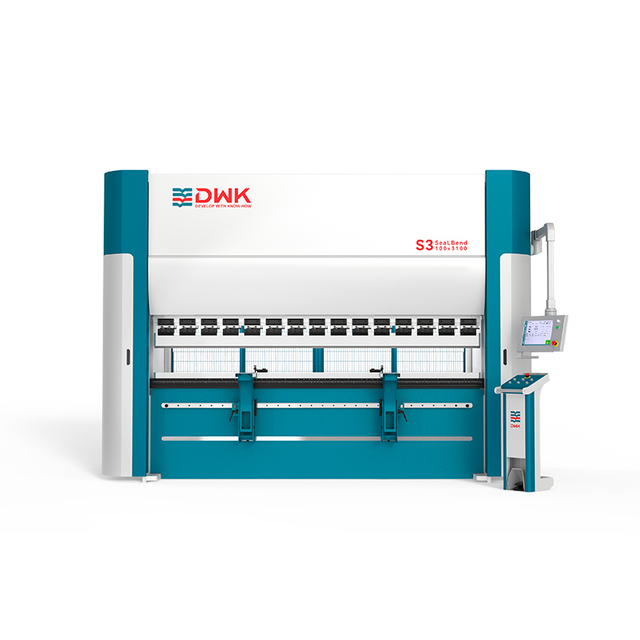
The market in 2026 offers three distinct drive technologies. Your choice should depend on your product mix, precision requirements, and energy goals.
| Feature | Hydraulic | Electric | Hybrid |
|---|---|---|---|
| Primary Application | Heavy plate (10mm+), Structural | High-speed sheet metal, Electronics | General fabrication, Medium duty |
| Energy Efficiency | Low (Motor idles constantly) | High (Servo-on-demand) | Medium-High |
| Maintenance | High (Oil, filters, seals) | Low (Greasing screws/belts) | Medium (Less oil volume) |
| Max Tonnage | Unlimited (3000T+) | Limited (Usually <300T) | High |
For heavy-duty applications, the CNC Hydraulic Bending Machine remains the industry workhorse. They are unbeatable for bending thick plate (10mm+) and high-tonnage structural steel. However, they come with trade-offs. The main motor typically runs continuously, consuming energy even when the machine is idle. Over long shifts, hydraulic oil heats up, causing "thermal drift" where the viscosity changes, potentially affecting the ram's stopping position and angle consistency.
If your shop focuses on high-precision sheet metal for electronics, medical devices, or aerospace, a CNC Electric Bending Machine is often the superior choice. These machines use servo motors to drive the ram directly. The "ROI Factor" is significant: they consume 50-70% less energy because they only draw power during the actual bend cycle. They operate silently and eliminate the risk of oil leaks. The limitation lies in the initial capital cost and tonnage ceiling; they are rarely cost-effective for applications requiring more than 300 tons.
Hybrid systems offer a middle ground. They utilize servo motors to pump hydraulic fluid only when the ram needs to move. This design balances the raw power of hydraulics with the energy efficiency and speed control of electric servos, making them an excellent all-rounder for job shops with varied workloads.
Beyond the power source, the mechanical and digital precision of the machine determines part quality.
When you apply tons of force to the center of a metal sheet, the machine's upper and lower beams naturally bow away from each other. This physical reality causes the bend angle in the center of the part to be more open than at the ends (the "canoe" effect).
You must evaluate the crowning system. CNC mechanical crowning uses a system of opposing wedges within the lower beam to physically curve the die bed upward, matching the deflection of the upper beam. This method generally offers better long-term stability and curve accuracy compared to hydraulic cylinders placed in the lower beam, which can suffer from seal wear and pressure inconsistencies over time.
The backgauge determines how you position the part. A basic 2-axis system (X, R) is sufficient for simple parallel flanges. However, for complex geometries, an Advanced (4-6 Axis) system becomes mandatory.
X-axis: Depth (flange length).
R-axis: Height (for different die heights).
Z1/Z2: Independent finger movement left-to-right.
Independent Z1/Z2 fingers are crucial when bending parts with non-parallel sides or when you need to bend multiple small parts setup across the machine bed simultaneously. Without them, operators waste time manually adjusting finger positions.
The controller is the "Brain" of the operation. In 2026, you should look for controllers (like Delem, Cybelec, or ESA) that support direct 3D file import (STEP, IGES). The system should automatically calculate the bend sequence and detect potential collisions with the tooling or frame before the operator lifts a sheet. This capability mitigates the skill gap, using graphical visualizations to help less experienced operators reduce setup time significantly.
With skilled labor becoming harder to find, automation is no longer a luxury; it is a survival strategy. You can view this as climbing an "Automation Ladder."
Level 1 (Automatic Tool Changers - ATC): Setup time is the biggest killer of efficiency in high-mix, low-volume production. An ATC can reduce setup time from 30 minutes to under 3 minutes, ensuring the machine spends more time bending and less time waiting.
Level 2 (Robotic Arms): Adding robotic arms for pick-and-place operations reduces reliance on manual labor for repetitive tasks. This is ideal for medium-volume runs where operator fatigue leads to errors.
Level 3 (Integrated Bending Centers): These fully automated systems feature sheet followers and automatic loading/unloading, essentially acting as a factory-within-a-factory.
Ensure the machine supports MES/ERP integration. You need real-time data on production rates and downtime to make informed business decisions. Additionally, verify the tool clamping system. Compatibility with major standards (like Wila/Trumpf or Promecam) ensures you can source tooling easily and potentially use your existing inventory.
While bending is the focus here, remember that efficient fabrication flows from upstream processes. Ensure your data systems can link bending operations with upstream metal cutting or plate cutting stations to optimize the entire production line.
Brochures often list identical specifications for machines that perform very differently. To find a reliable partner, you must look beyond the marketing.
Perform the "Own-File" Test. Do not accept a demonstration on a manufacturer's pre-programmed demo part. Send them your most difficult, complex DXF file and request a video of the setup and bend process. This reveals the true capability of their software and the rigidity of their machine.
Verify Frame Rigidity. Ask for data on how the frame is machined. Top-tier manufacturers heat-treat their frames to remove internal welding stresses before machining. If a frame retains internal stress, it will slowly warp over time, destroying accuracy.
Support is critical. Check the location of their spare parts stock. If a controller fails or a seal blows, waiting for a shipment from overseas can cost you weeks of production. Demand defined Service Level Agreements (SLA) regarding response times.
Distinguish between "Assemblers" and "Engineers." Assemblers buy generic frames and components and bolt them together. Engineers design their own proprietary technology and understand the physics of the machine. This distinction is vital for long-term troubleshooting and customization.
The purchase price is only the tip of the iceberg. A cheaper machine often costs more over its lifecycle.
Compare energy consumption in kW/h per part produced. Electric machines drastically reduce this cost. Also, consider consumables. Hydraulic machines require regular oil changes, filter replacements, and seal maintenance, costing thousands of dollars annually. Electric machines typically only require lubrication.
Inconsistent angles lead to high scrap rates. If a machine produces 5% scrap due to thermal drift or poor crowning, that material cost comes directly off your bottom line. Furthermore, downtime costs associated with non-standard components—such as off-brand motors that are impossible to source locally—can paralyze production.
Finally, consider the exit strategy. Market demand for used Name Brand equipment remains high. Generic equipment from unknown "assemblers" often has little to no resale value after 5-10 years.
The "best" CNC bending machine is not necessarily the fastest or the most powerful. It is the one that balances sufficient tonnage headroom with the precision requirements of your specific material mix and the software capabilities your workforce needs. In 2026, the controller's intelligence and the machine's energy efficiency are as important as the steel frame itself.
We advise prioritizing the control system and frame quality over maximum theoretical speed. A fast machine that produces inaccurate angles is simply a fast scrap generator. Before requesting quotes, conduct a time study on your current floor. Identify whether your bottleneck is setup time (requiring better software/ATC) or bend speed (requiring electric drive) to ensure your investment solves the right problem.
A: Air bending pushes the material into the die opening without bottoming out, using the punch depth to determine the angle. It requires less tonnage and allows multiple angles from one tool set but relies heavily on machine precision. Bottoming forces the material to conform to the die shape, requiring significantly higher tonnage (3-5x more) and causing faster tooling wear, but offering high accuracy for specific angles.
A: Stainless steel generally requires about 50% more tonnage than mild steel due to higher tensile strength and yield points. If a tonnage chart suggests 40 tons/meter for 6mm mild steel, plan for approximately 60 tons/meter for stainless steel. Always consult the specific material data sheet.
A: Yes, if your production volume is high or your parts require high precision. The energy savings (up to 70%) and reduced maintenance (no hydraulic oil) often result in a lower Total Cost of Ownership within 3-4 years. However, for low-volume or heavy-plate work, hydraulic may still be more economical.
A: Generally, no. While some press brakes have adaptors for punching, they are not designed for cutting. Efficient fabrication usually requires separate machines for plate cutting (like laser or plasma) and specialized equipment for tube cutting. Using a press brake for shearing forces can damage the ram and accuracy mechanisms.
A: A high-quality machine should last 15-20 years. Hydraulic machines may require seal and valve replacements every 5-7 years to maintain performance. Electric machines often have longer intervals between major maintenance events since they lack hydraulic circuits, though servo motors and ball screws will eventually require servicing.


